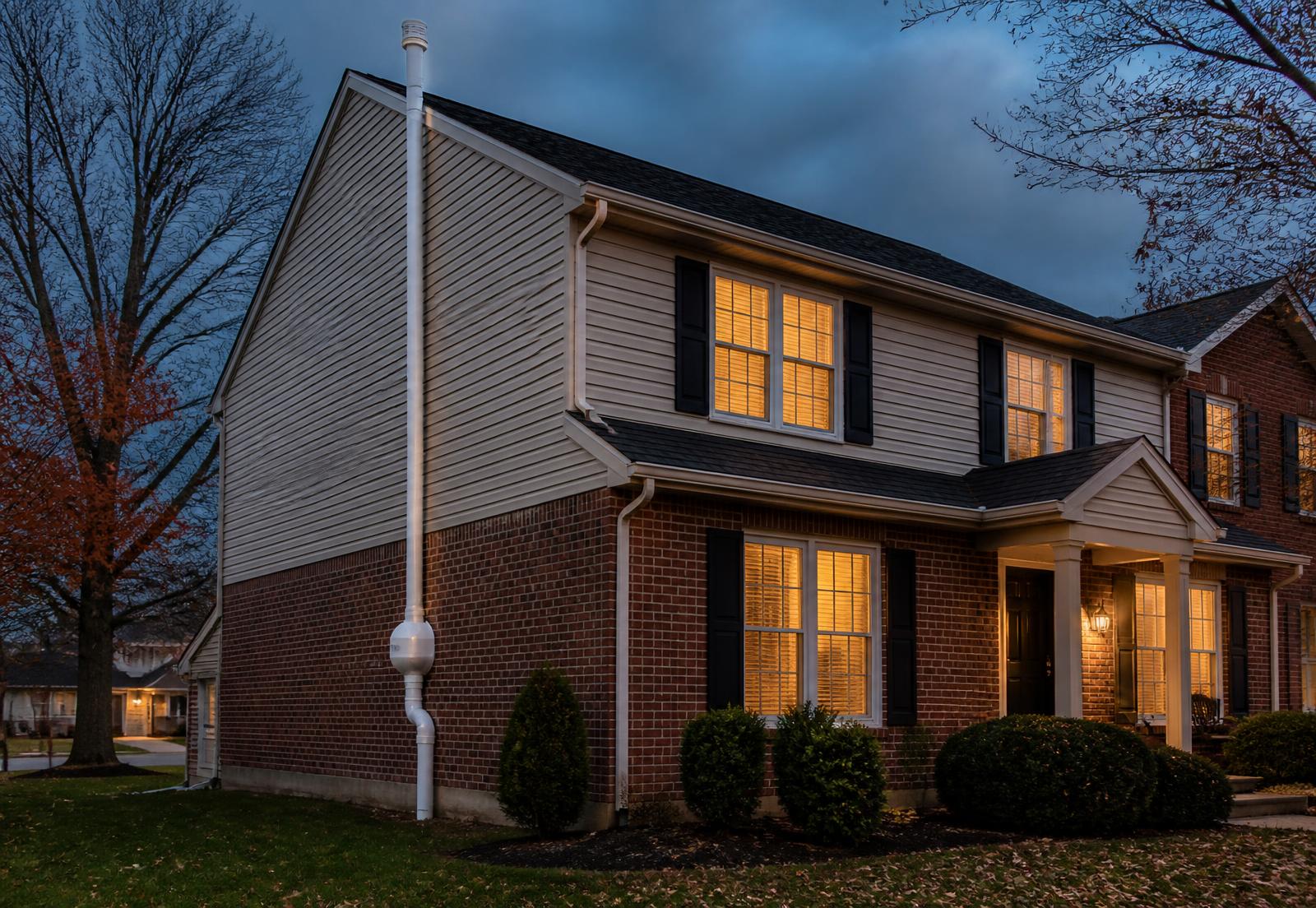
New Construction Is Not Automatically Radon-Free
It is a common misconception that a new home, especially one with modern construction techniques and vapor barriers, will not have a radon problem. Marion County and the surrounding Central Indiana counties fall in EPA Zone 1 regardless of when a home was built, since radon comes from the soil, not from a home's age or construction quality. New subdivisions in Hamilton, Hendricks and Johnson County sit on the same glacial till soils as older Indianapolis neighborhoods.
Some builders in the region now include a radon-resistant new construction rough-in as a standard or optional feature, but a rough-in is a passive system, not an active one, and its performance can vary significantly based on how carefully it was installed and how the specific home's soil and slab conditions interact with it.
Understanding the Passive Rough-In System
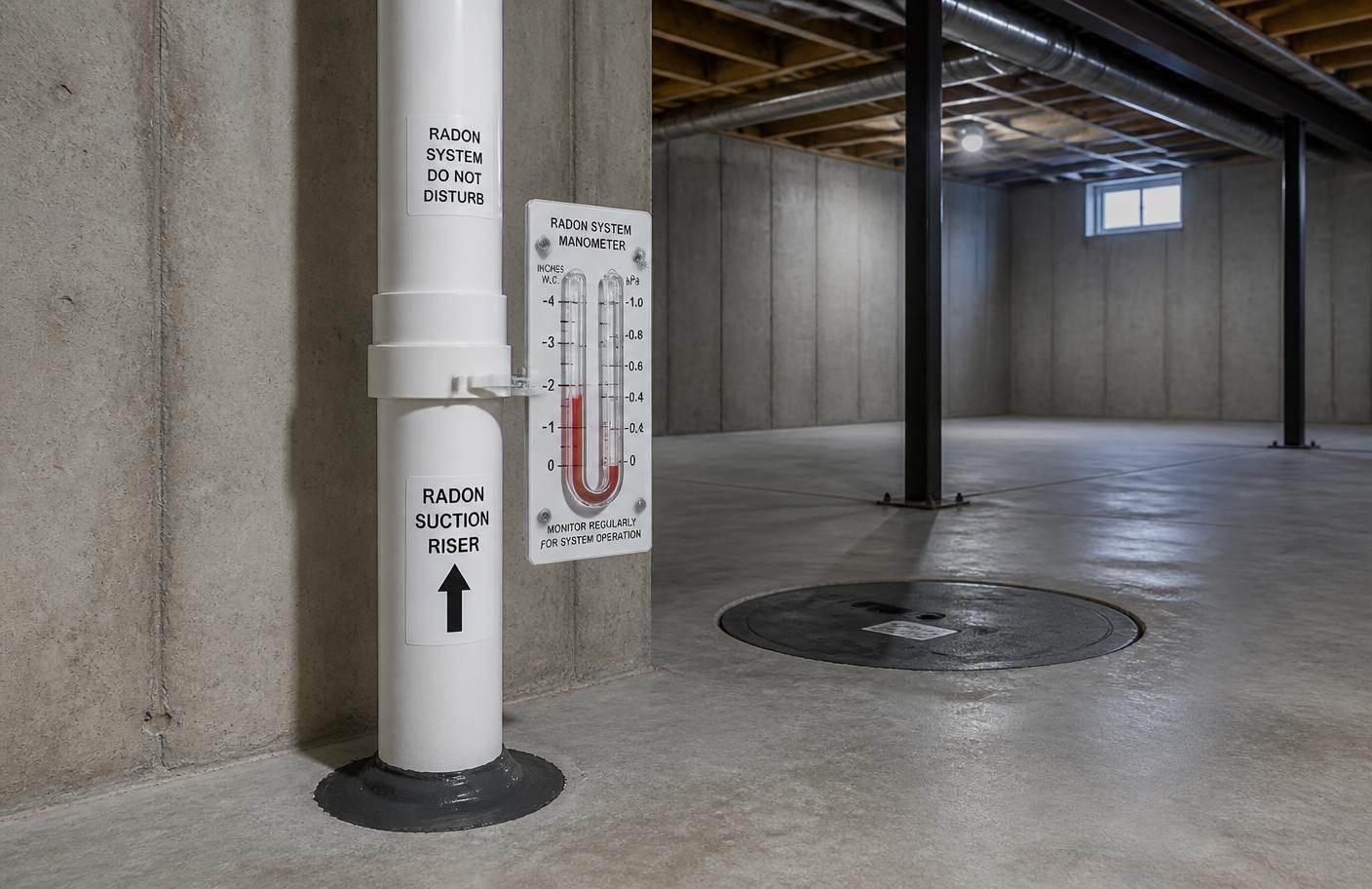
A typical radon-resistant rough-in includes a layer of gas-permeable aggregate or matting beneath the slab, a vapor barrier over that layer, a vertical PVC pipe running from beneath the slab up through the house and roof, and a junction box near the pipe in the attic pre-wired for a future fan, along with a labeled pipe so future owners and inspectors know what it is. Some builders cap the pipe as-is, relying on passive stack-effect airflow to vent some soil gas without a fan, while activation, adding an inline fan to the existing pipe, converts it into an active sub-slab depressurization system.
Passive vs. Active Performance
A passive system alone can reduce radon somewhat through natural pressure differences, but it does not create the same forced negative pressure field an active fan-driven system does, and passive-only performance varies considerably based on soil permeability, weather, and how tightly the home is sealed. This is exactly why a post-occupancy test is necessary rather than assuming the rough-in alone solved the problem.
When to Test a New Home
We recommend testing a new construction home after move-in, once the household is living in the home under normal conditions, since construction dust, incomplete HVAC balancing, and open doors during the build process can all affect readings taken too early. A test performed a few weeks to a few months after occupancy, once HVAC settings and daily routines have settled into a normal pattern, gives a more representative baseline.
- Test after move-in under normal household HVAC operation
- Closed-house protocol applies the same as any other home
- Evaluate whether existing passive stub needs fan activation
- Retest after activation to confirm the now-active system performs
Activating a Rough-In Stub
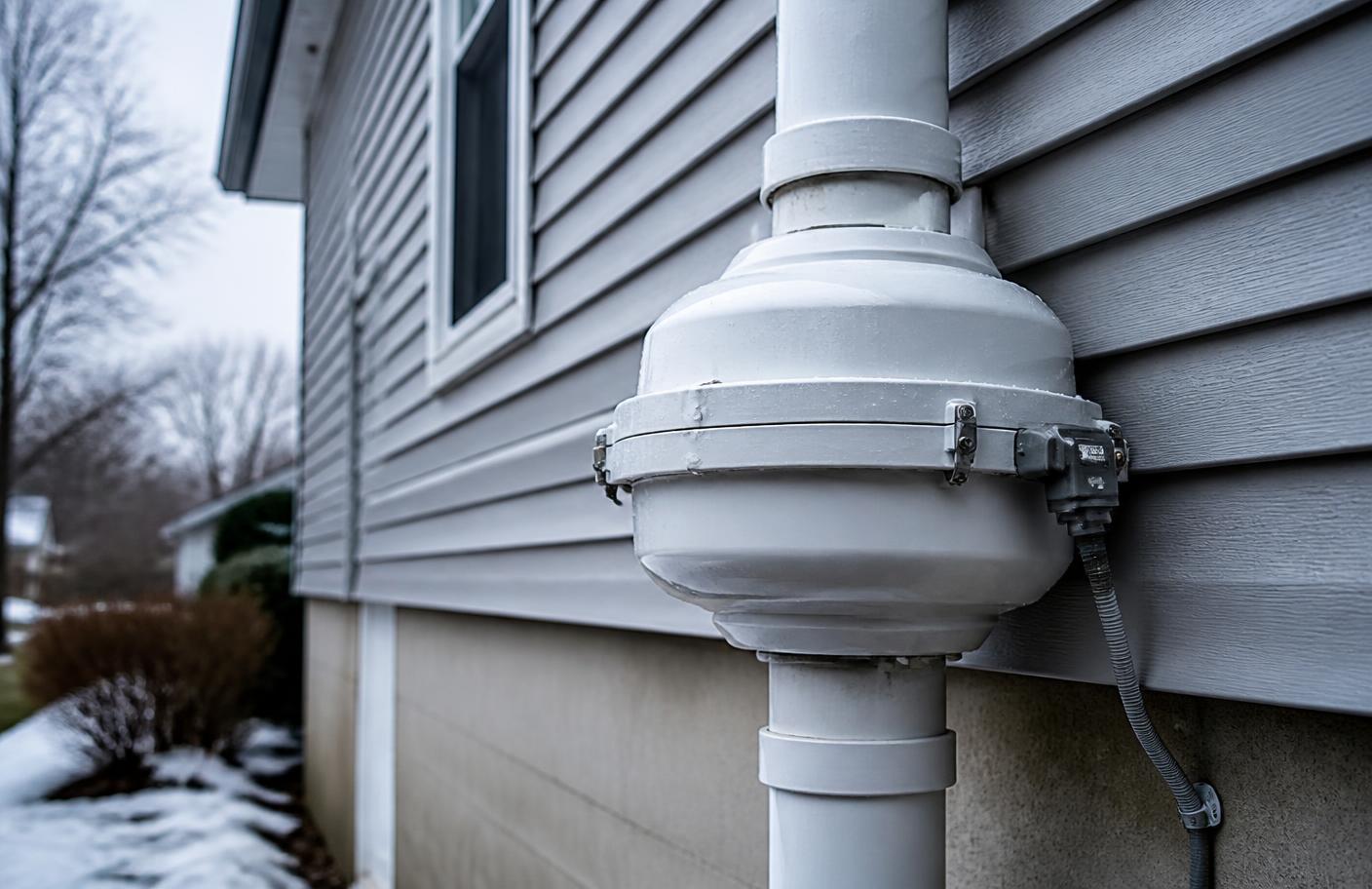
If a test on a new home with an existing rough-in comes back at or above the 4.0 pCi/L action level, or in the 2 to 4 pCi/L range where EPA says to consider fixing, activation is often a more straightforward project than a retrofit installation on a home without any existing infrastructure, since the pipe and attic wiring box are frequently already in place. We confirm the existing rough-in was installed correctly, connect an appropriately sized inline fan, and verify suction with a manometer before finishing.
In homes where the rough-in was not installed to a workable standard, whether due to an undersized stub, poor sub-slab aggregate connection, or a pipe routed incorrectly, additional work may be needed beyond simply adding a fan, which we identify during the evaluation before proposing a scope.
New Homes Without Any Rough-In
Not every builder in the Indianapolis area includes a radon-resistant rough-in as standard, particularly on older new-construction inventory or builders who do not offer it as an option. Testing a home without any existing rough-in follows the same process as testing any other home, and if mitigation is needed, we design and install a full sub-slab depressurization system from scratch rather than activating existing infrastructure.