The Core Principle: Depressurization
Radon mitigation systems work by creating a zone of negative pressure beneath the foundation that is lower than the pressure inside the home, reversing the natural tendency for soil gas to be drawn indoors. Rather than trying to seal every possible entry point, which is rarely fully achievable, depressurization intercepts radon at its source before it has a chance to migrate into the living space at all.
This approach is generally more reliable than sealing alone because a home's foundation almost always has some combination of visible and hidden pathways, from hairline cracks to porous concrete, that cannot all be practically sealed. By lowering sub-slab pressure below indoor pressure, air actually flows toward the suction point and out through the vent pipe instead of upward into the home.
Step 1: Site Evaluation and Suction Point Testing
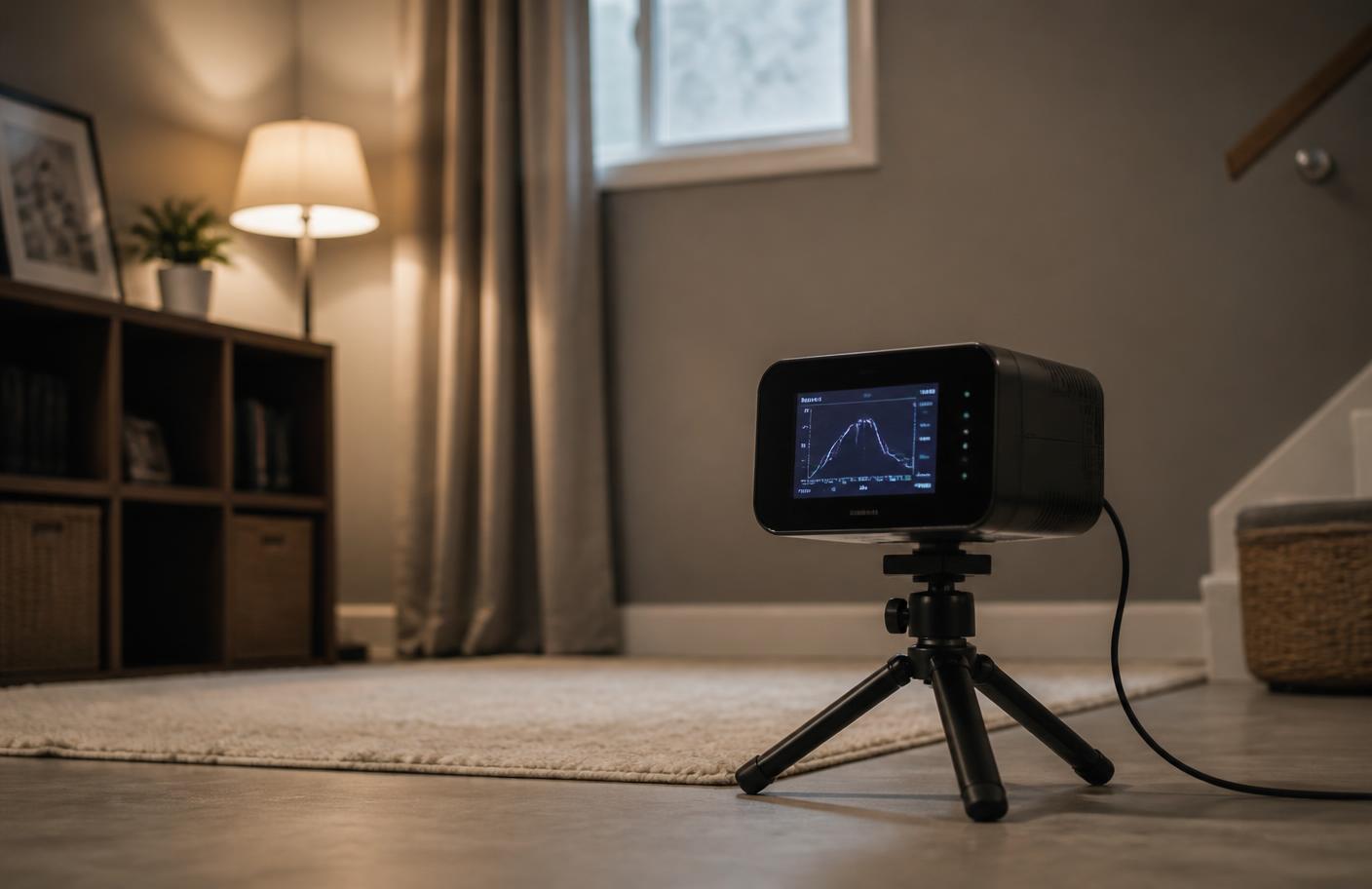
Before installation, a contractor evaluates the foundation type, identifies the sump pit if present, and often performs a communication test using a manometer and a temporary vacuum source to see how well a potential suction point can draw air across the full area beneath the slab. Good communication, often aided by a gravel layer beneath the slab, generally means fewer suction points will be needed; poor communication may require additional points or a different location.
What a Manometer Measures
A manometer measures the pressure differential created by the system, both during testing to confirm suction point viability and after installation to confirm the completed system is achieving adequate vacuum beneath the slab, which is a key indicator of ongoing system performance.
Step 2: Creating the Suction Point
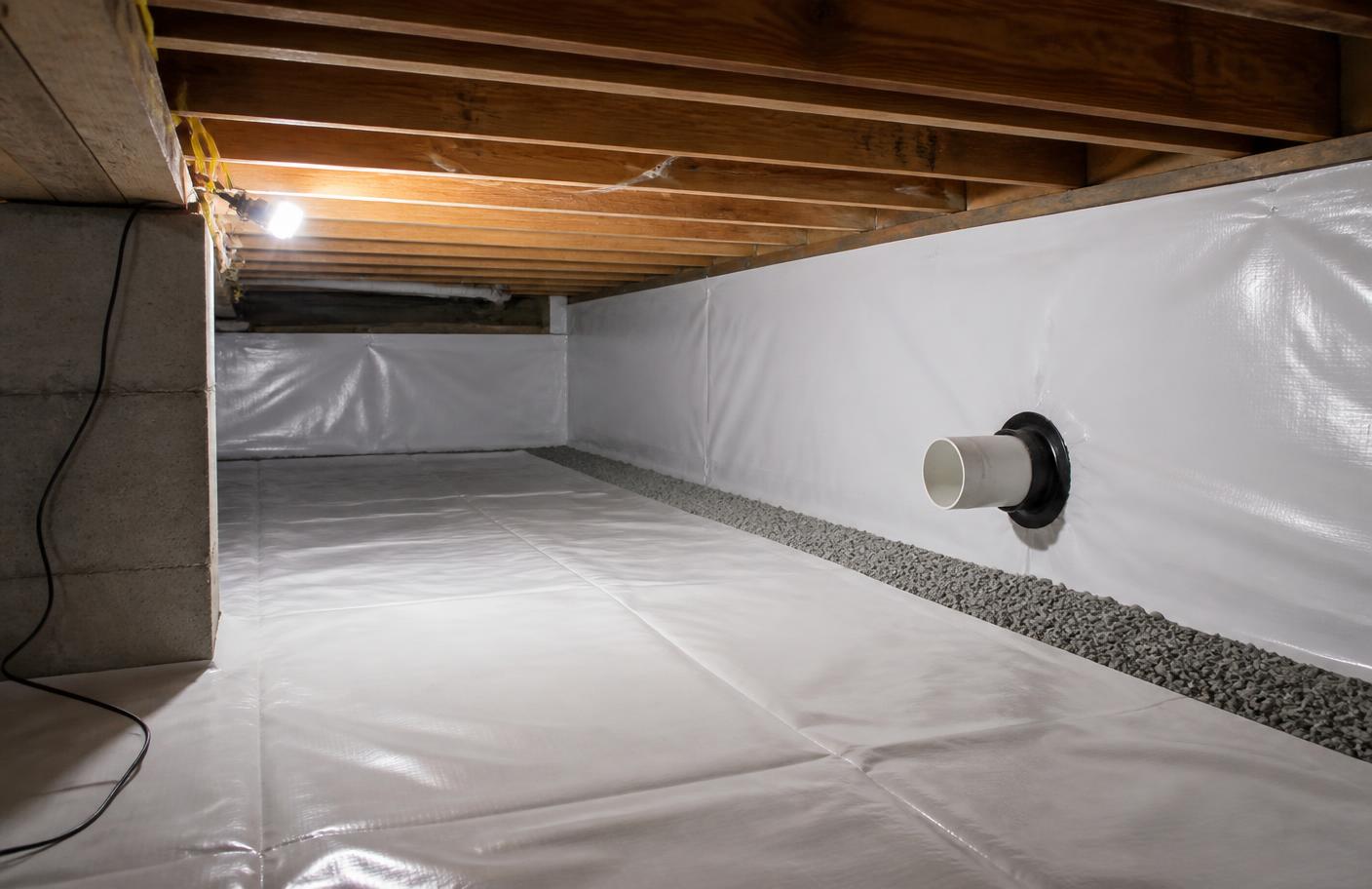
The suction point is most often created either by removing a section of the sump pit lid and sealing an airtight cover with a pipe fitting, or by drilling a small hole through the basement slab, often 4 to 6 inches in diameter, and excavating a small pit beneath it to improve airflow before setting a pipe fitting in place. In crawl spaces, the equivalent step involves sealing a heavy-duty membrane over the soil and creating a suction point beneath it.
- Sump pit conversion with a sealed, airtight lid
- Direct slab penetration with a small excavated pit beneath
- Sub-membrane suction point for crawl space foundations
Step 3: Piping and Fan Installation
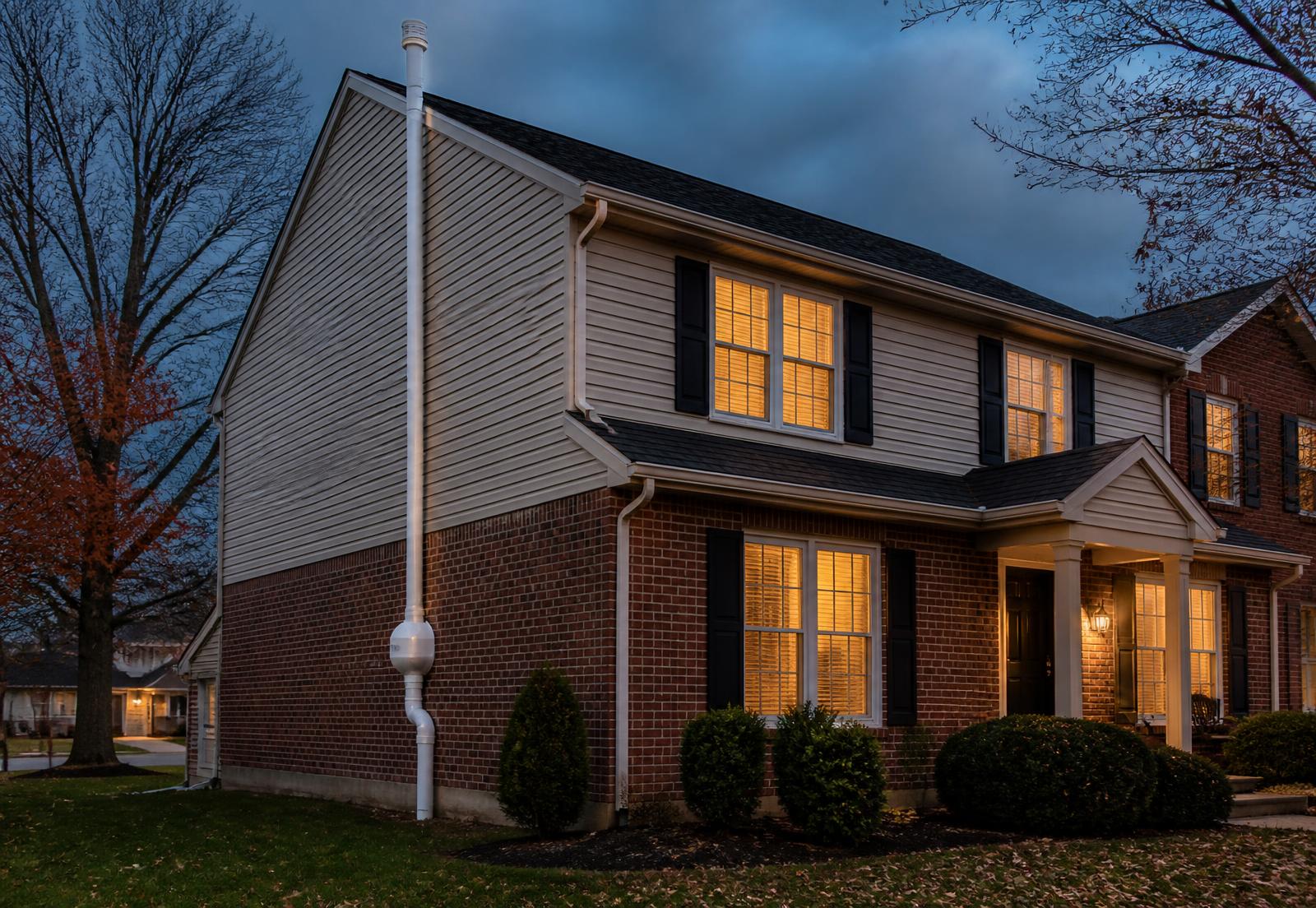
PVC piping is routed from the suction point vertically through the home, typically through a closet, garage, or exterior wall chase, to an exterior-mounted radon fan and then up past the roofline or eave for proper exhaust termination. The fan is selected based on the static pressure needs identified during site evaluation, referencing the fan's published performance curve to ensure it can maintain adequate vacuum across the specific sub-slab conditions of that home.
Exhaust termination location matters for safety and code compliance, since discharge points are kept above the roofline and away from windows, doors, and other openings to prevent radon-laden exhaust air from re-entering the home or a neighboring structure.
Step 4: System Testing and Confirmation
Once installed, the system is checked with a manometer to confirm it is achieving proper vacuum at the suction point, and the fan is inspected for correct operation and stable mounting. A U-tube manometer or similar gauge is often left in place, either built into the piping or mounted nearby, so homeowners can do a quick visual check of ongoing system performance at any time.
A post-mitigation radon test, typically started no sooner than 24 hours after the system begins running, provides objective confirmation that the installed system has reduced indoor radon below the EPA action level of 4.0 pCi/L, completing the mitigation process.
Ongoing System Operation
A properly installed sub-slab depressurization system runs continuously, similar to a furnace fan, and is designed to operate for years with minimal maintenance beyond periodic visual checks of the manometer gauge and occasional fan replacement as the unit ages. Homeowners should note any change in the manometer reading, unusual fan noise, or a return of musty basement odors as signs the system may need service.