Why Testing Comes First
Radon concentrations vary from house to house and even room to room based on foundation type, soil conditions, HVAC operation, and how tightly the home is sealed. Two nearly identical houses on the same Carmel street can post very different results, so there is no substitute for measuring the actual home rather than assuming a neighborhood average.
Marion County and most of Central Indiana fall in EPA Zone 1, meaning the predicted average indoor screening level exceeds 4 pCi/L, but a Zone 1 designation is a planning tool for area-wide risk, not a substitute for an individual test. We have measured readings well under 2 pCi/L in some Zone 1 homes and readings above 10 pCi/L in others just a few doors down.
Testing Devices We Use
Short-term testing typically uses charcoal canisters or electret ion chamber detectors placed for two to four days, which is the standard approach for real estate transactions where a fast turnaround matters. Alpha-track detectors are better suited to longer measurement periods, typically 90 days to a year, and give a more representative picture of a home's year-round average since radon levels shift with the seasons.
For homeowners who want ongoing visibility, or for post-mitigation verification, we deploy continuous radon monitors that log hourly readings and flag any interference like a door being propped open mid-test. A CRM printout also shows whether readings spiked during a specific window, which is useful diagnostic information if a result comes back borderline.
- Charcoal canister and electret testing for 48 to 96 hour real estate timelines
- Continuous radon monitors with hourly logging for tamper detection
- Long-term alpha-track testing for a full seasonal average
- Post-mitigation retesting to confirm system performance
Closed-House Protocol
Accurate results depend on closed-house conditions, meaning windows and exterior doors stay closed except for normal entry and exit, starting 12 hours before the test begins and continuing through the entire test period. This matters because opening windows or running whole-house fans changes the pressure relationship between the home and the soil, which can artificially lower a reading during the test and mask the home's true baseline level.
We also check that HVAC systems are operating in their normal mode, note whether a sump pump or humidifier is running, and confirm the test device is placed in a proper location: at least 20 inches off the floor, away from drafts, exterior walls, and direct sunlight, in the lowest lived-in level of the home.
Real Estate Timelines
Home purchase and sale contracts in Indiana commonly build in a short inspection contingency window, so we schedule short-term tests to land results before that deadline. We can also place tamper-evident continuous monitors when a listing agent or buyer's agent wants documented proof the closed-house conditions were maintained.
Multi-Level and Finished Basement Homes
In homes with a finished lowest level used as living space, that level is the correct location for the primary test device under EPA protocol, since it is the space occupants actually use. We can add a second device on another level if there is a specific concern about a bonus room or in-law suite over a crawl space.
Reading Your Results
The EPA action level is 4.0 pCi/L, and the agency recommends fixing a home at or above that level and considering a fix between 2 and 4 pCi/L, since there is no known safe threshold below which radon exposure carries zero risk. A single short-term test above 4.0 pCi/L is generally sufficient basis to move forward with mitigation without waiting on a second confirmatory test in most real estate situations.
For a homeowner not under a transaction deadline, a result in the 2 to 4 pCi/L range is sometimes followed by a second short-term test or a longer-term test to build more confidence in the number before deciding, since seasonal variation can shift a borderline reading either direction.
Testing New Construction and Commercial Buildings
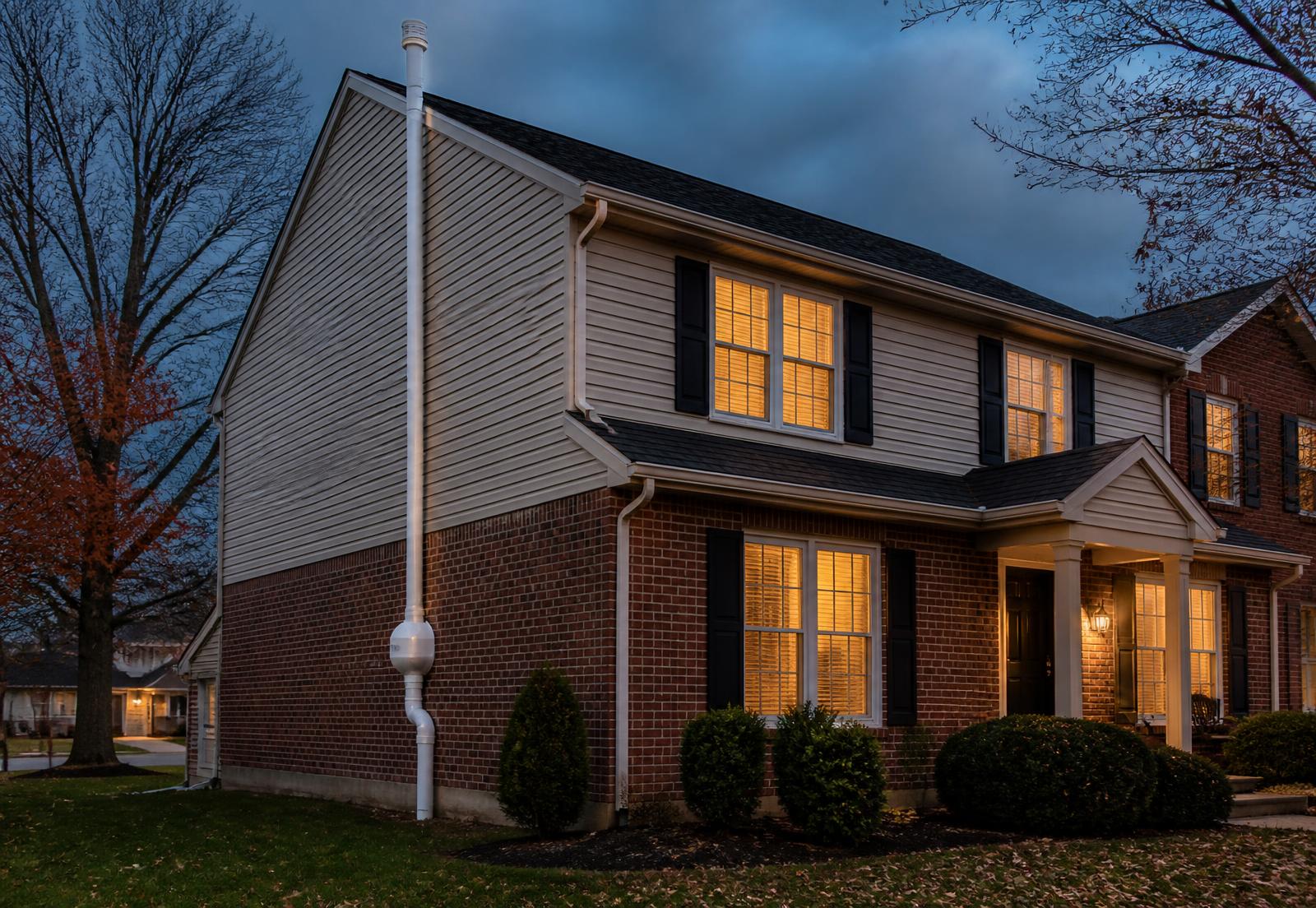
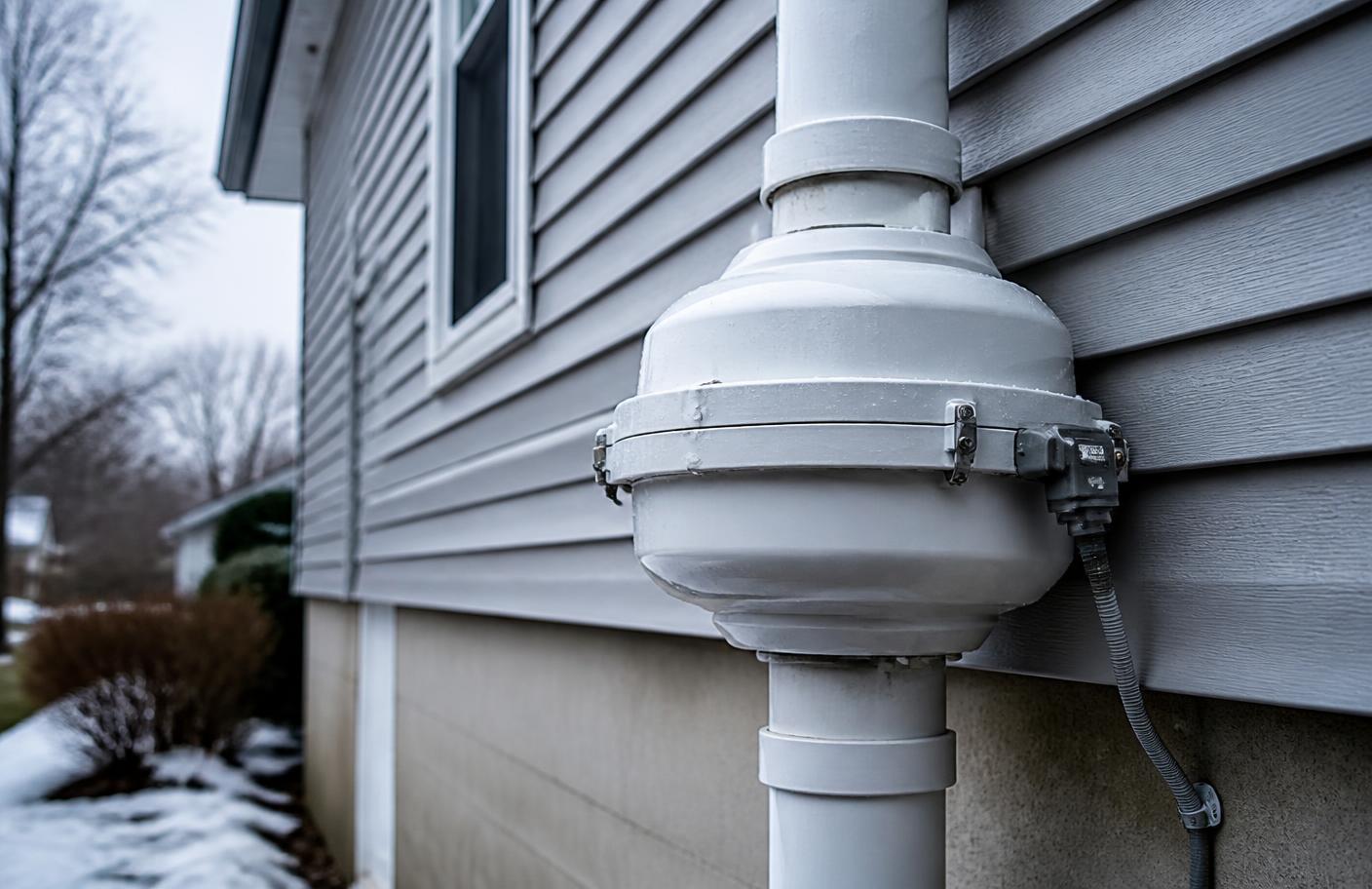
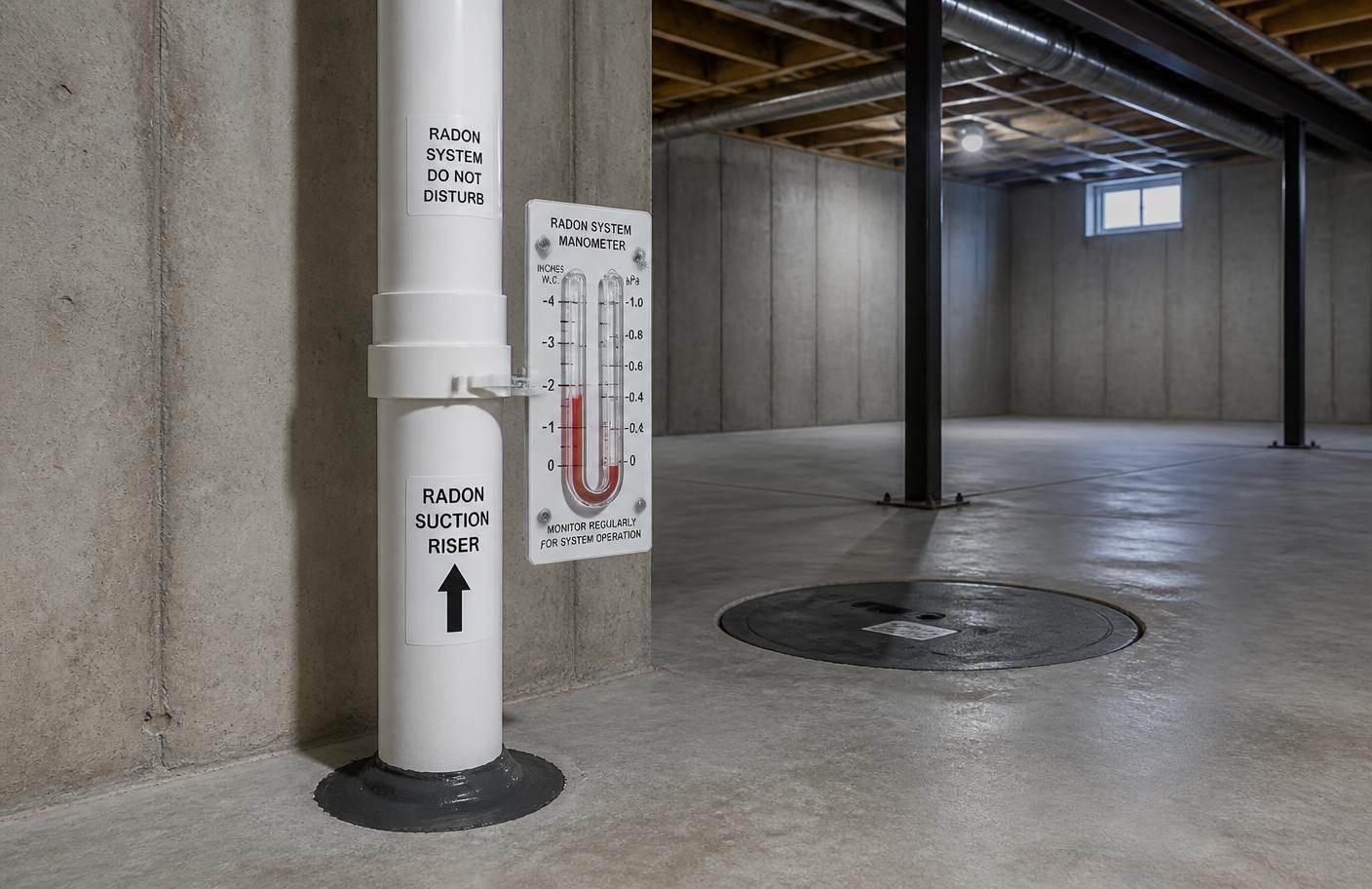
New construction homes, even those built with a passive radon-resistant stub system, still need a post-occupancy test to confirm the passive system is adequate or whether the fan needs to be activated. Builders in Hamilton and Hendricks County subdivisions increasingly rough in these stubs, but a stub alone does not guarantee a result under 4.0 pCi/L.
Commercial and multi-tenant buildings require a different sampling approach entirely, often multiple detectors across ground-floor zones following an ANSI-style building-wide protocol rather than a single-device residential test, since occupied square footage and floor plan complexity are far greater.
Coverage Across Central Indiana
We test homes throughout Indianapolis and Marion County along with Carmel, Fishers, Noblesville, Westfield, Greenwood, Zionsville, Avon, Brownsburg and Plainfield. Testing logistics are essentially the same everywhere in this service area since the closed-house protocol and EPA guidance apply uniformly, but scheduling around real estate deadlines is where local familiarity with regional title companies and closing timelines helps.