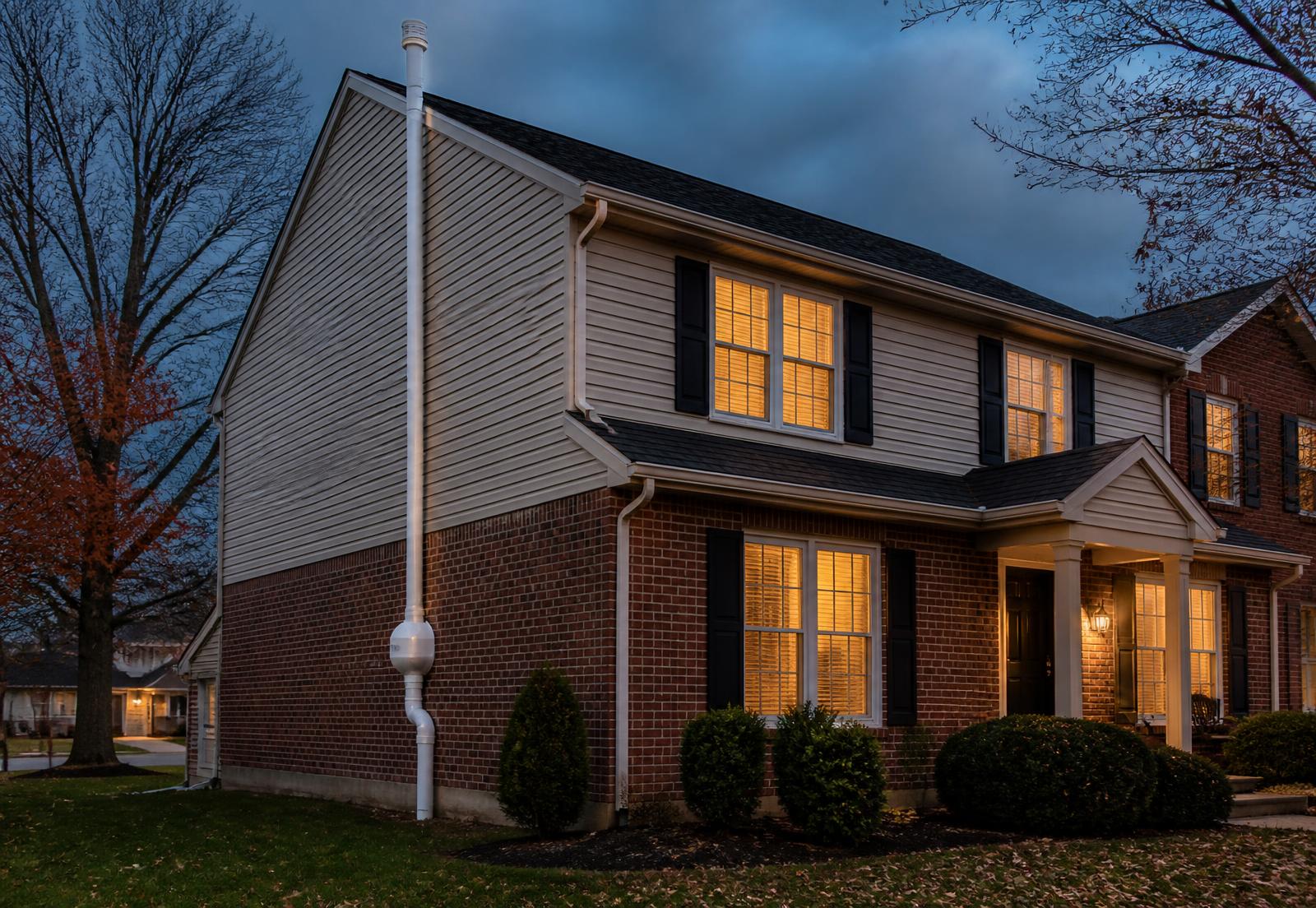
Why Post-Mitigation Testing Is Not Optional
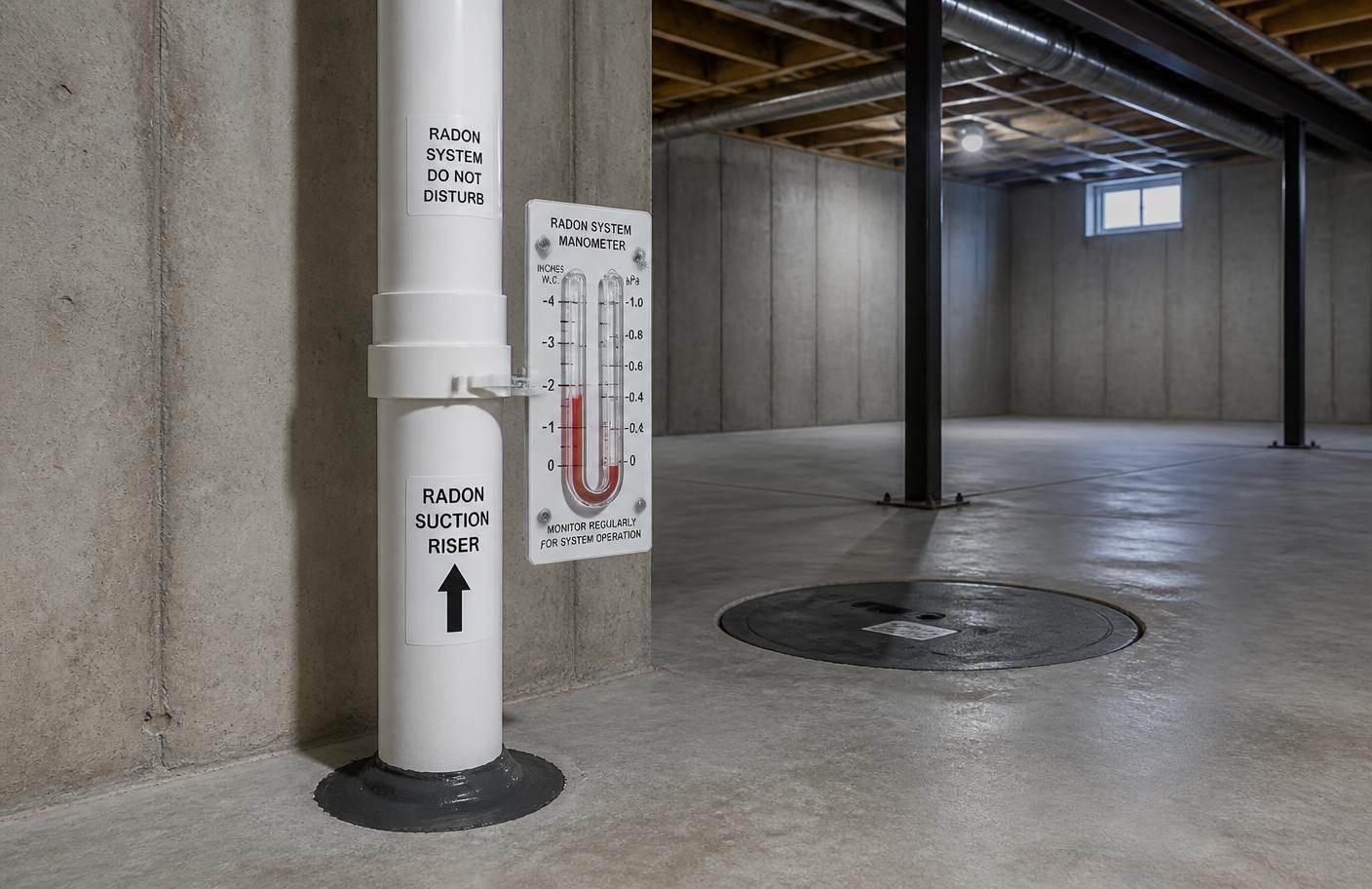
A mitigation system's gauge showing suction confirms the fan is running and creating a pressure differential, but it does not by itself confirm the actual indoor radon concentration. Only a radon test measures the number that matters, and EPA guidance treats a post-mitigation test as a standard part of confirming a system's effectiveness, not an optional extra step.
This distinction matters because a system can be pulling suction at the pit while still leaving an untreated pathway elsewhere in the foundation, particularly on larger or more complex slabs, additions, or homes with both a basement and a crawl space. A retest is the only way to know whether the whole home, not just the area near the suction point, actually dropped below the target level.
Timing the Test After Activation
EPA protocol calls for waiting a minimum period after a system is turned on before placing a post-mitigation test, generally at least 24 hours, to allow the pressure field beneath the foundation to stabilize. Testing too soon after activation can produce a reading that does not yet reflect the system's steady-state performance.
We schedule post-mitigation tests based on the activation date recorded at installation, and for homeowners on a real estate deadline we plan backward from the closing date to make sure there is enough time for both the waiting period and the test duration itself.
Closed-House Conditions Still Apply
Just like an initial test, a post-mitigation test requires closed-house conditions, windows and exterior doors closed except for normal entry and exit, for roughly 12 hours before the test and throughout its duration. Skipping this step can produce an artificially low reading that does not represent the home's true performance under normal living conditions.
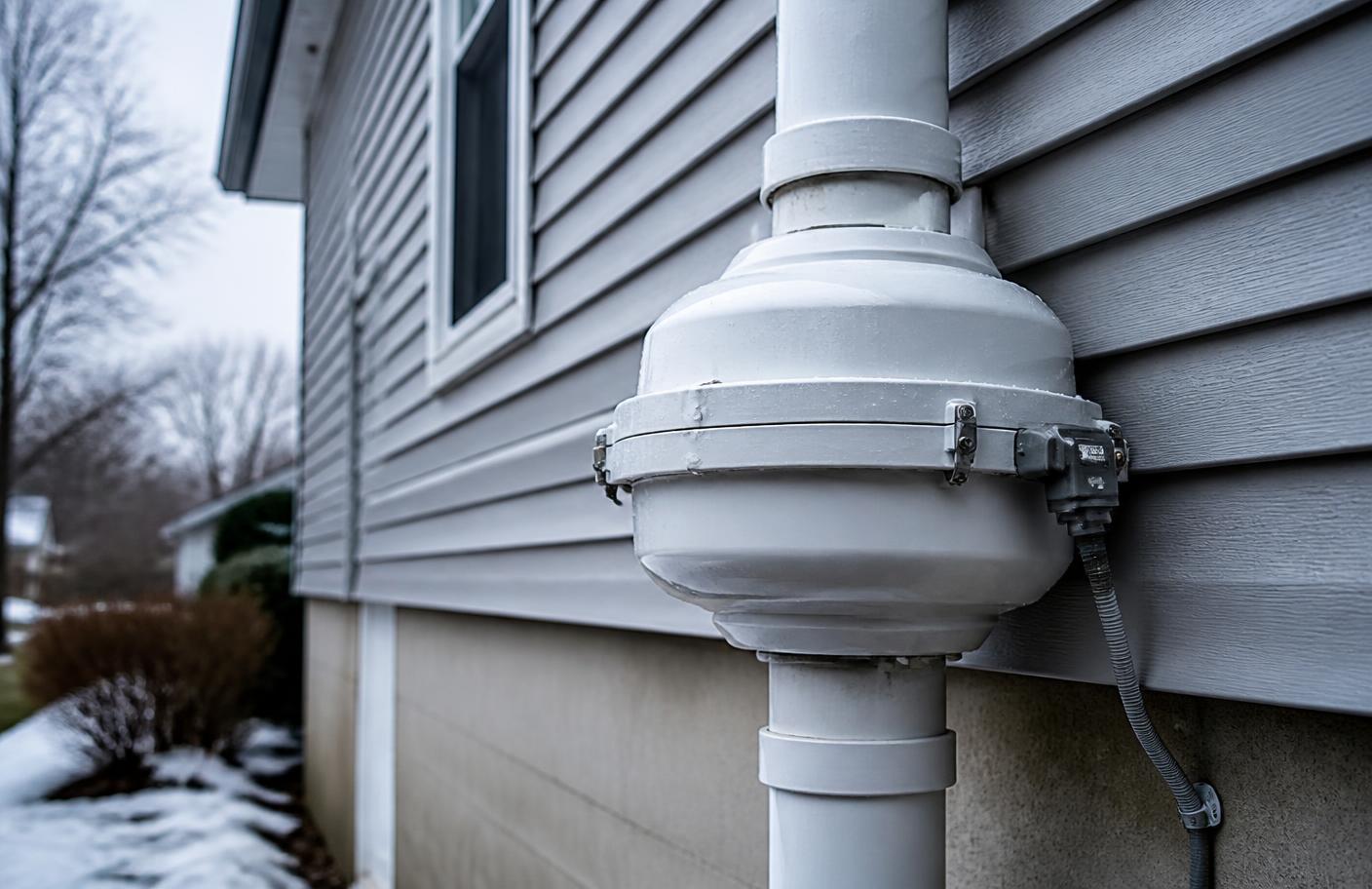
Devices Used for Post-Mitigation Testing
Short-term charcoal or electret devices are the most common choice for post-mitigation testing since results are usually needed relatively quickly, whether for a homeowner's peace of mind or a real estate deadline. Continuous radon monitors are particularly useful in this context because their hourly data shows a clean, stable reading throughout the test period, which is more convincing documentation than a single averaged number, especially for a buyer or lender reviewing the result.
- Minimum 24-hour waiting period after system activation before testing
- Closed-house conditions maintained for the full test duration
- Continuous monitor data showing stable, hourly readings post-installation
- Documentation suitable for real estate or system warranty records
What a Good Result Looks Like
A properly functioning system typically brings a home's radon level well below the 4.0 pCi/L action level, often into the range of 1 to 2 pCi/L, though the exact resulting number depends on the home's pre-mitigation level and how thoroughly all entry points were addressed. There is no requirement to reach a specific number below 4.0 pCi/L, but a system that only reduces levels to just under the action level, rather than achieving a more comfortable margin, may warrant a second look at whether an additional suction point or sealing would improve performance further.
If the Post-Mitigation Test Still Shows Elevated Levels
An elevated post-mitigation result means the system needs further diagnostic work, not that mitigation has failed as a method. We go back to the pressure field data, checking whether suction is reaching every area of the slab, whether a sump pit or crawl space area was missed, or whether the fan needs to be upsized for the amount of slab it is trying to cover, and adjust the system accordingly before retesting again.