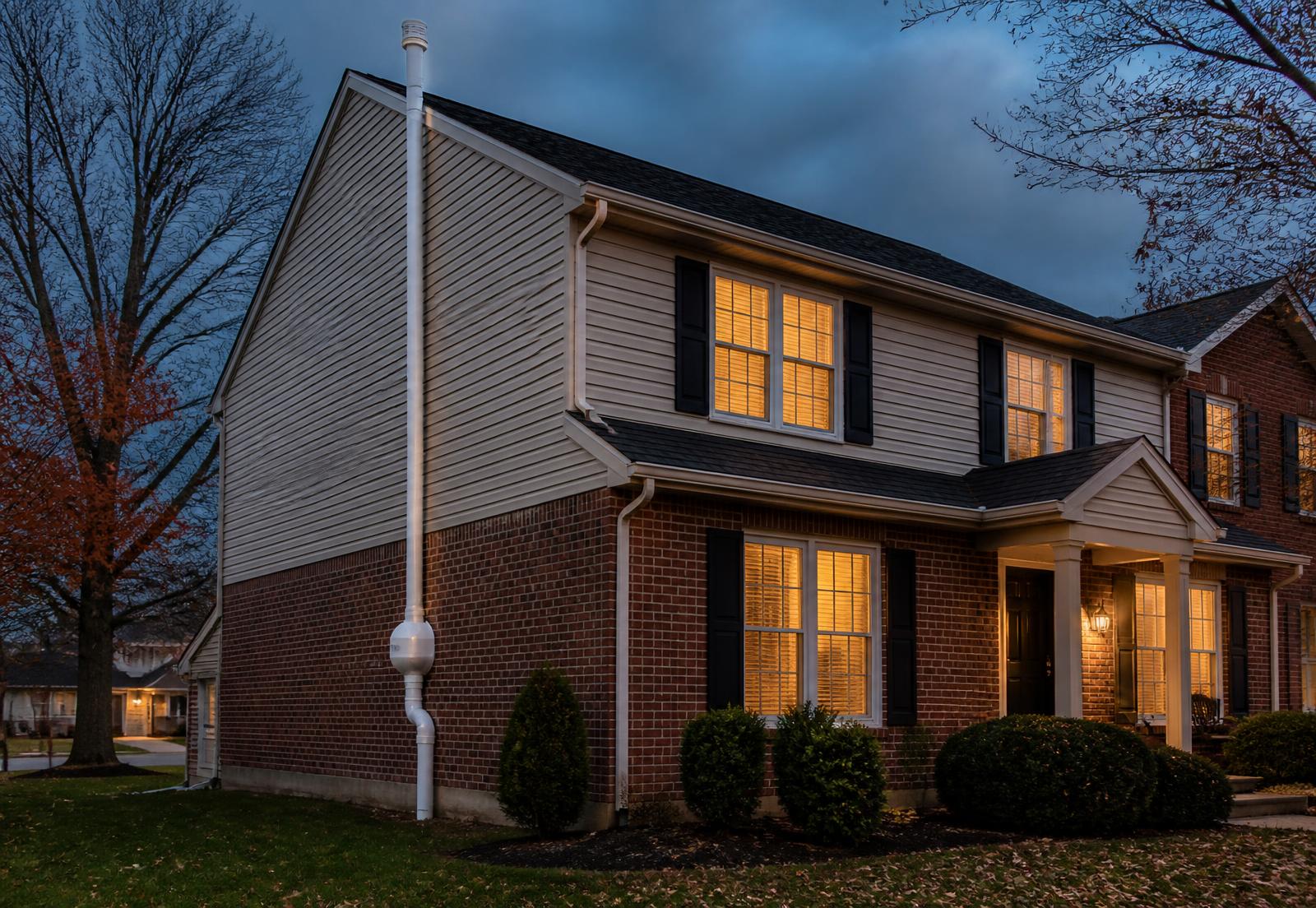
Why Maintenance Matters for a System That Never Turns Off
Radon fans run continuously, day and night, year-round, which means they accumulate far more operating hours over a few years than most household appliances ever see. That continuous duty cycle is exactly why periodic maintenance makes sense, since small issues like a slightly degraded seal or a fan starting to draw more current than normal often develop gradually rather than announcing themselves with a sudden failure.
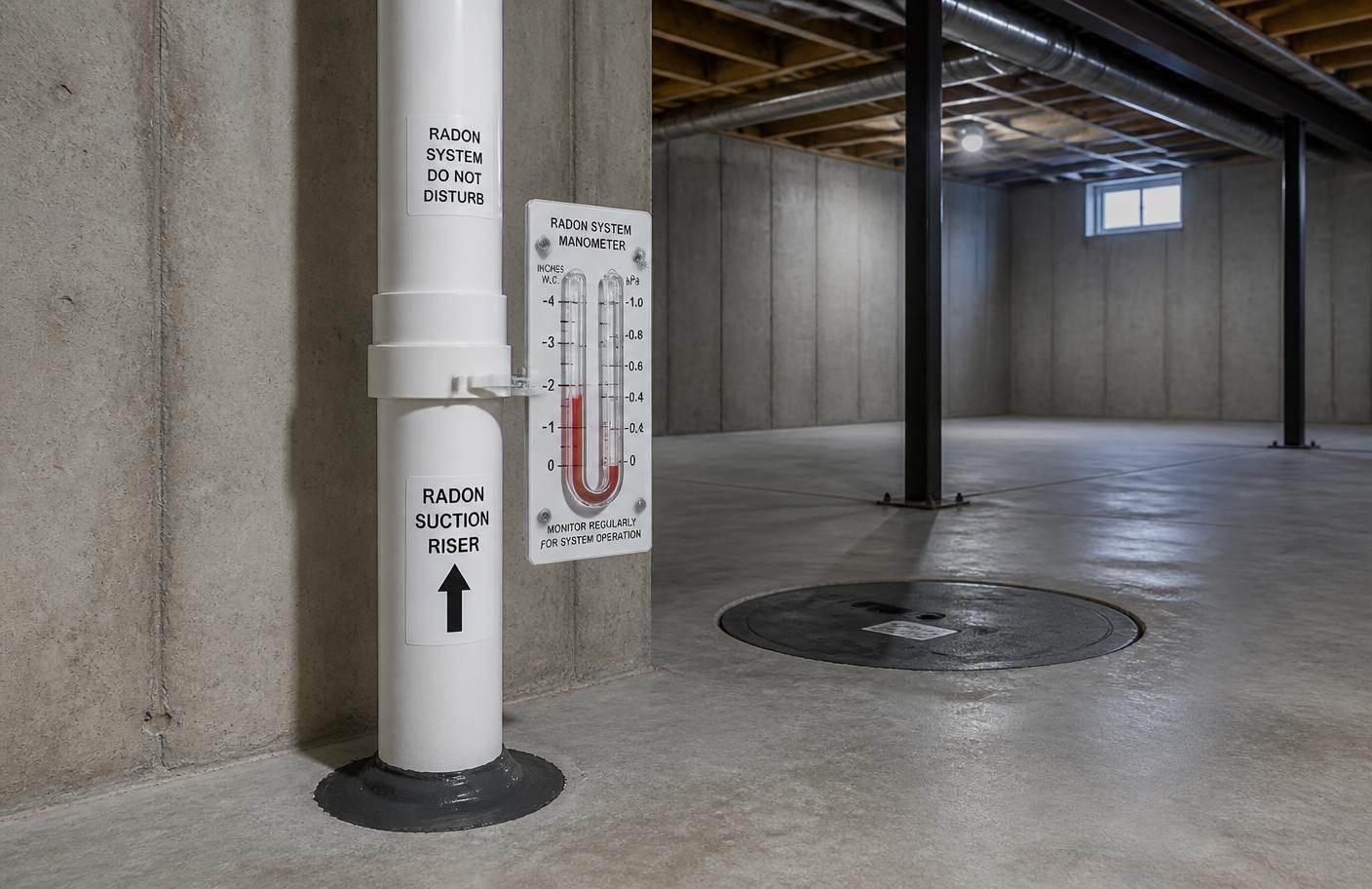
Homeowners in Indianapolis frequently install a system, watch it work, and then do not think about it again for years, which is generally fine as long as someone is glancing at the gauge periodically. A maintenance visit goes further than a glance, checking suction with a manometer, inspecting accessible piping and seals, and confirming the fan's electrical draw is within normal range for its model.
What a Maintenance Visit Includes
We start with the gauge reading and compare it to what would be expected for the system's original design, then take a manometer measurement directly at the suction pipe to confirm actual suction strength rather than relying solely on the visible indicator. We inspect accessible PVC piping, both interior and exterior runs, for cracks, discoloration, or loose couplings, and check the slab or membrane seal at the suction point for any sign of degradation.
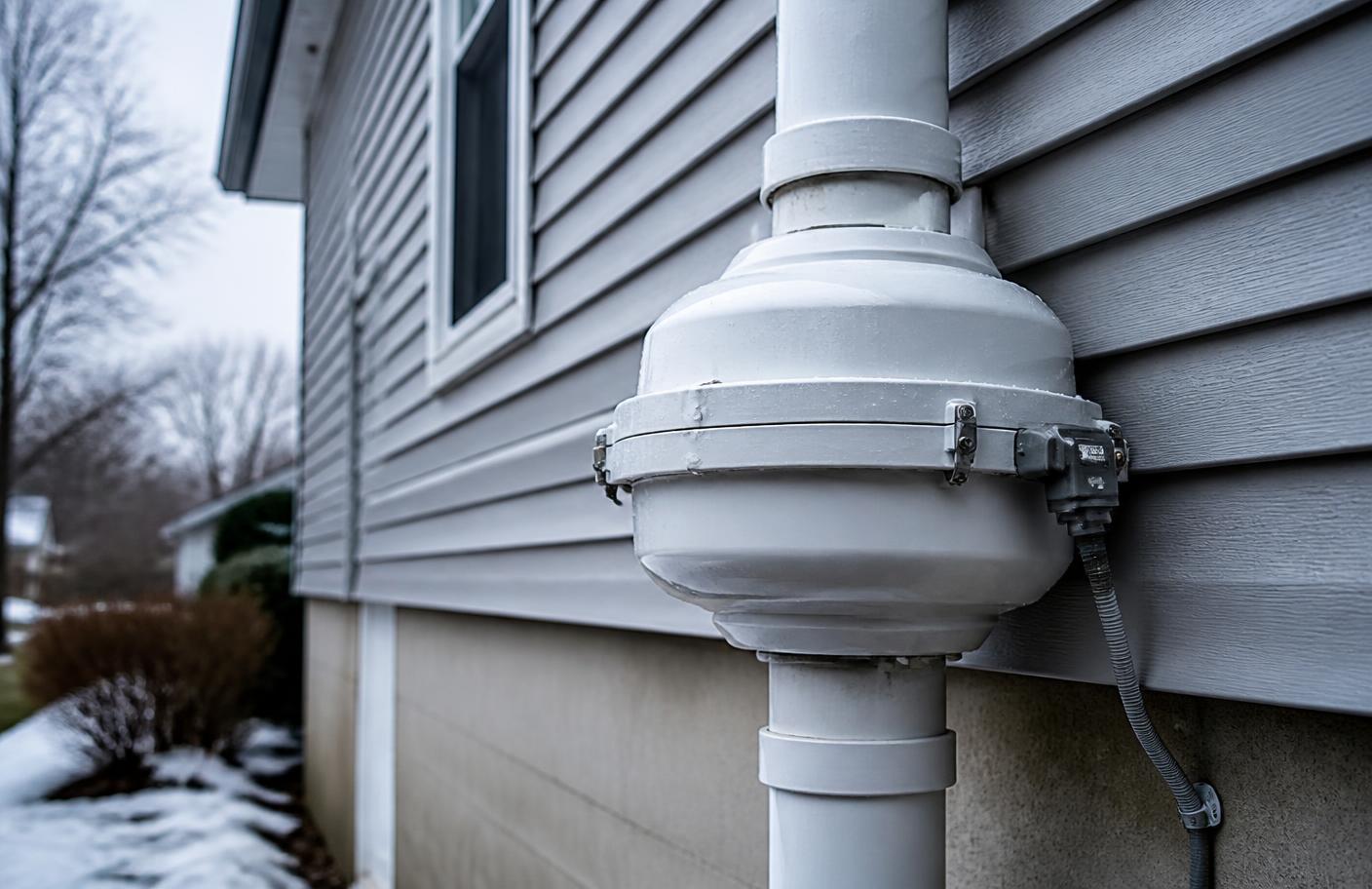
We also check the fan mount, electrical connections, and, for exterior units, the condition of the housing and weatherproofing after seasons of Indiana temperature swings. If a sump pit lid is part of the system, we confirm the gasket seal is still intact and has not been disturbed by other work done in the basement since installation.
- Manometer suction check at the suction pipe
- Visual inspection of piping, joints and slab or membrane seals
- Fan housing, mounting and electrical connection check
- Sump pit lid and gasket inspection where applicable
- Recommendation on whether a retest is warranted
How Often to Schedule a Check
There is no universally mandated maintenance interval for a residential radon system, but checking the gauge yourself every few months and scheduling a professional inspection periodically, particularly around the time of year the system was originally installed, is a reasonable practice for most homeowners. Homes preparing to sell often schedule a maintenance check ahead of a retest requested during the transaction, since it is far better to catch and correct a small issue before a buyer's test than to explain a failed retest during negotiations.
After Home Renovations
Basement finishing projects, sump pump replacements, or any work near the foundation can disturb radon system components without the contractor realizing it, whether that means a loosened sump lid gasket or a pipe run bumped out of alignment. We recommend a maintenance check any time significant work has occurred near the suction pit, sump area, or piping route.
Catching Problems Before They Show Up on a Test
Because radon levels can take time to rise back toward pre-mitigation levels after a system's performance degrades, a slow seal leak or a fan gradually losing efficiency may not immediately produce an obvious spike on a short-term test. Regular maintenance checks catch these gradual issues at the mechanical level, through gauge and manometer readings, well before they might otherwise show up as an unpleasant surprise on a future retest.
Maintenance for Commercial and Multi-Zone Systems
Commercial buildings with multiple suction points or zones benefit even more from scheduled maintenance, since a single failed suction point on a larger building may not be immediately obvious if other zones are still functioning normally. We check each suction point and fan individually on these systems and provide a documented summary suitable for a property's maintenance or compliance records.