Fort Harrison's Influence on Local Housing
The redevelopment of Fort Benjamin Harrison into a state park and residential and commercial area has shaped much of Lawrence's more recent growth, with newer homes and townhomes built on and around the former base property. These newer structures typically use poured concrete basements or slab foundations that are generally straightforward to fit with a standard sub-slab depressurization system.
Away from the immediate Fort Harrison footprint, Lawrence's older mid-century neighborhoods feature a mix of full basements, partial basements, and slab construction from the postwar development boom, when the surrounding area grew alongside the fort's active military presence. These homes vary more in foundation condition and often benefit from an on-site evaluation before a mitigation approach is finalized.
Radon Risk in Marion County's Northeast Corner
Lawrence falls within Marion County, an EPA Zone 1 area, meaning the county's predicted average indoor radon levels exceed the 4.0 pCi/L action level. This designation is consistent across the county regardless of neighborhood, so homes near Fort Harrison State Park carry the same baseline risk classification as those elsewhere in Lawrence or Indianapolis proper.
Because Lawrence includes a mix of older basement homes and newer slab or basement construction, testing conditions can vary. A basement finished for living space should be treated as the primary test location, while homes with only a shallow crawl space beneath part of the structure should have that area evaluated alongside the main living level.
Mitigation System Design for Lawrence Homes
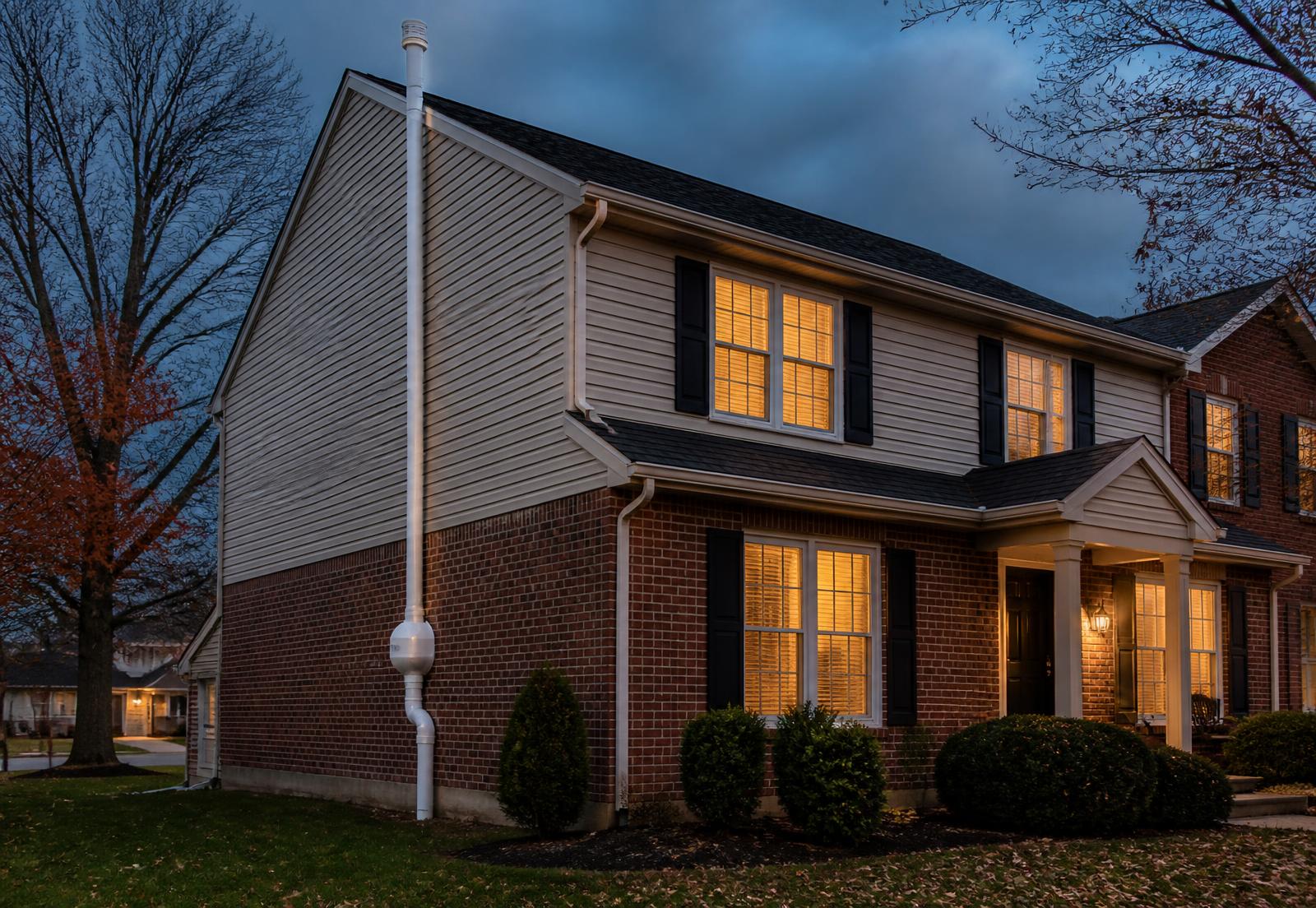
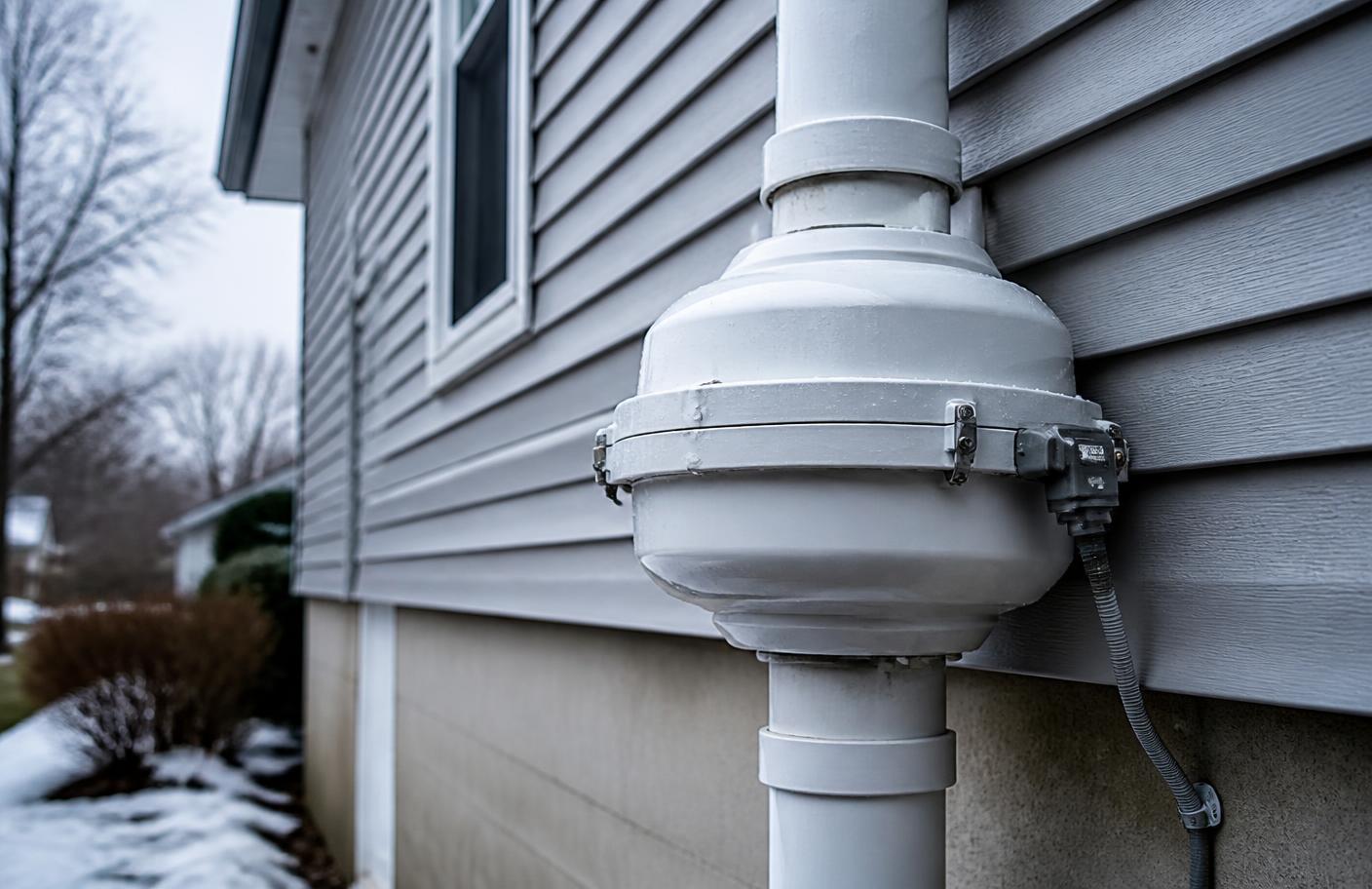
For the mid-century basement homes common throughout Lawrence, a single suction point sub-slab system is often sufficient when the slab is in reasonably good condition, with the fan and exterior discharge routed to avoid windows and eaves. Homes with a sump pit are frequently mitigated by sealing and capping the pit and using it as the suction point, which can simplify installation.
Newer construction near the redeveloped Fort Harrison property, including townhome-style units, may require coordination with shared walls or common foundations, since suction systems in attached construction sometimes need to address more than one unit's soil gas pathway depending on how the foundations are separated.
- Sump pit conversion to a sealed suction point where present
- Single sub-slab suction point for standard basement homes
- Foundation coordination for townhome or attached construction
- Exterior discharge routing that avoids windows and outdoor living areas
Local Landmarks and Neighborhood Character
Fort Harrison State Park, the Harrison Trails neighborhood, and the commercial corridor along Pendleton Pike and 56th Street all anchor different parts of Lawrence. Homes closest to the park tend to be newer, while neighborhoods further from the former base along older arterial roads reflect the city's earlier postwar development pattern.
After Installation
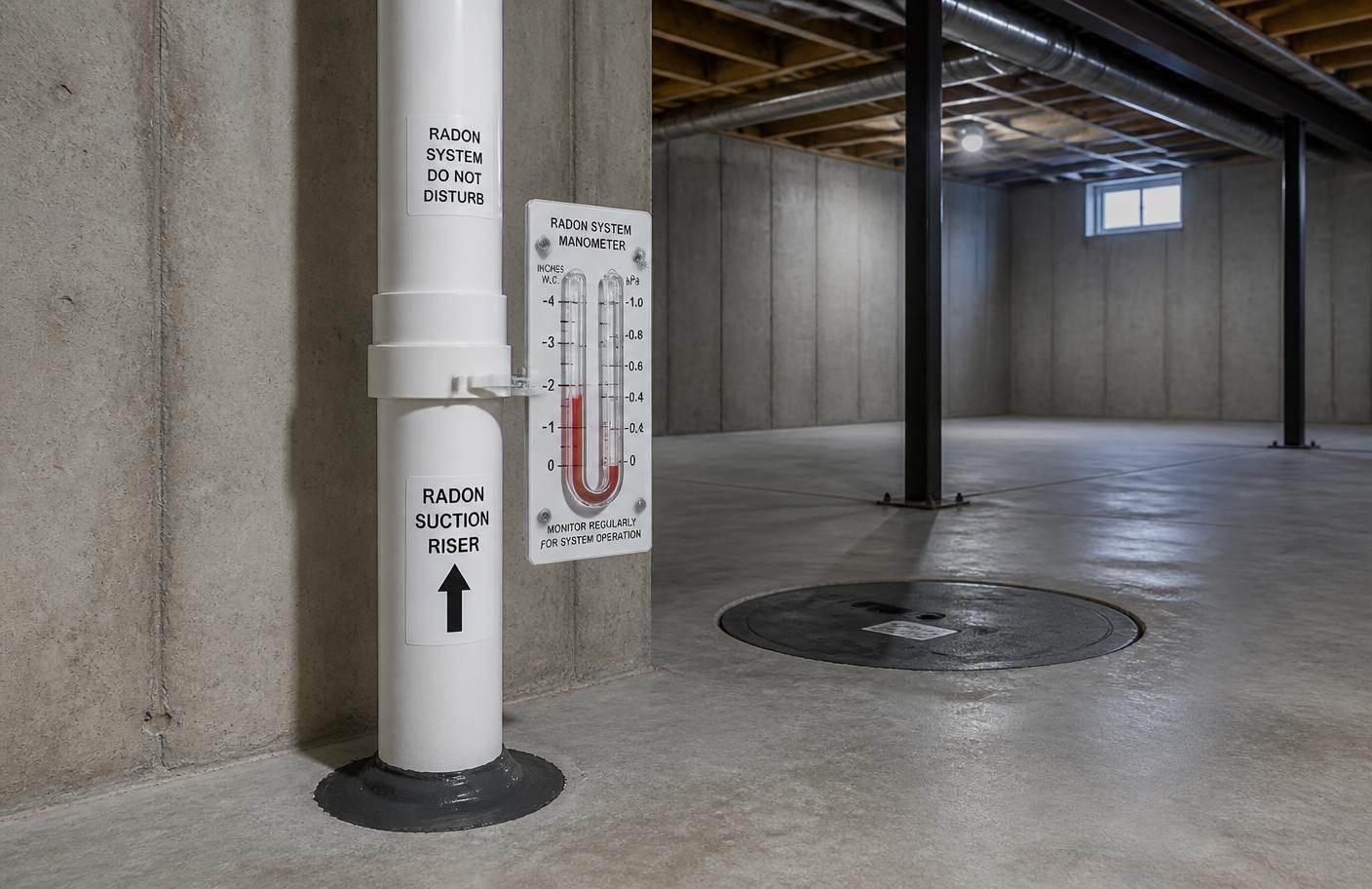
Once a system is installed, a continuously running fan maintains negative pressure beneath the slab or membrane, and a manometer gauge provides a simple visual check that the fan is operating. A follow-up radon test after the system has run continuously for at least 24 hours can confirm the reduction achieved for your specific home.