Brownsburg's Mixed Foundation Landscape
Unlike some Hamilton County suburbs where deep poured basements dominate, Brownsburg's housing includes a substantial share of slab-on-grade construction, particularly in subdivisions built during periods when slab foundations were the more economical choice for builders. Neighborhoods like parts of Southridge and some sections of Williamsburg feature slab construction, while other subdivisions such as Stonegate and Whitehall include a greater mix of basement and crawl space homes.
This variety means a mitigation contractor working in Brownsburg needs to evaluate each home's specific foundation type rather than assuming a single standard approach applies community-wide. Slab-on-grade homes require sub-slab suction points typically installed through a core-drilled hole in an interior floor, often in a garage, utility closet, or low-traffic interior area, since there is no basement to route piping through.
Mitigation for Slab-on-Grade Homes
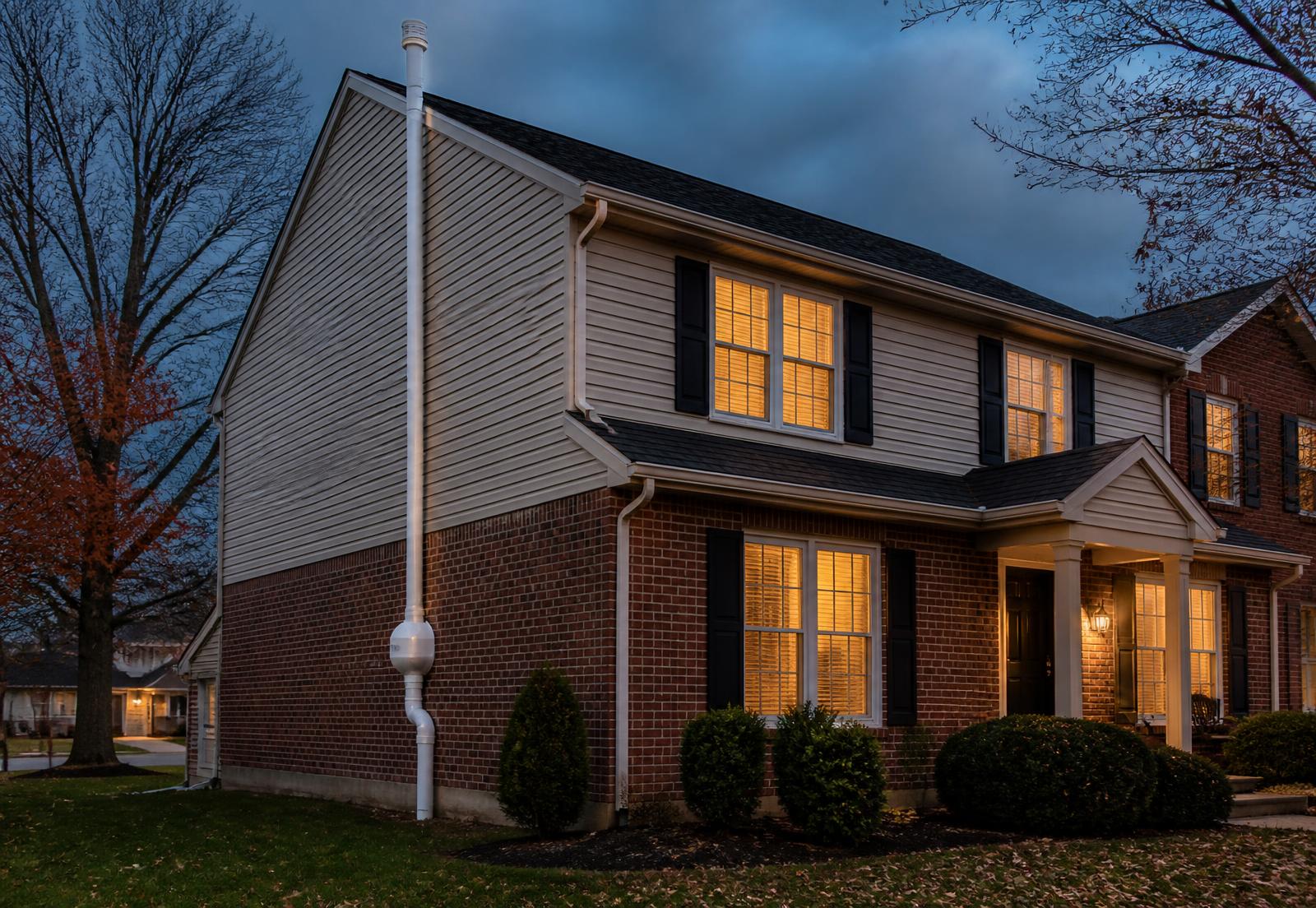
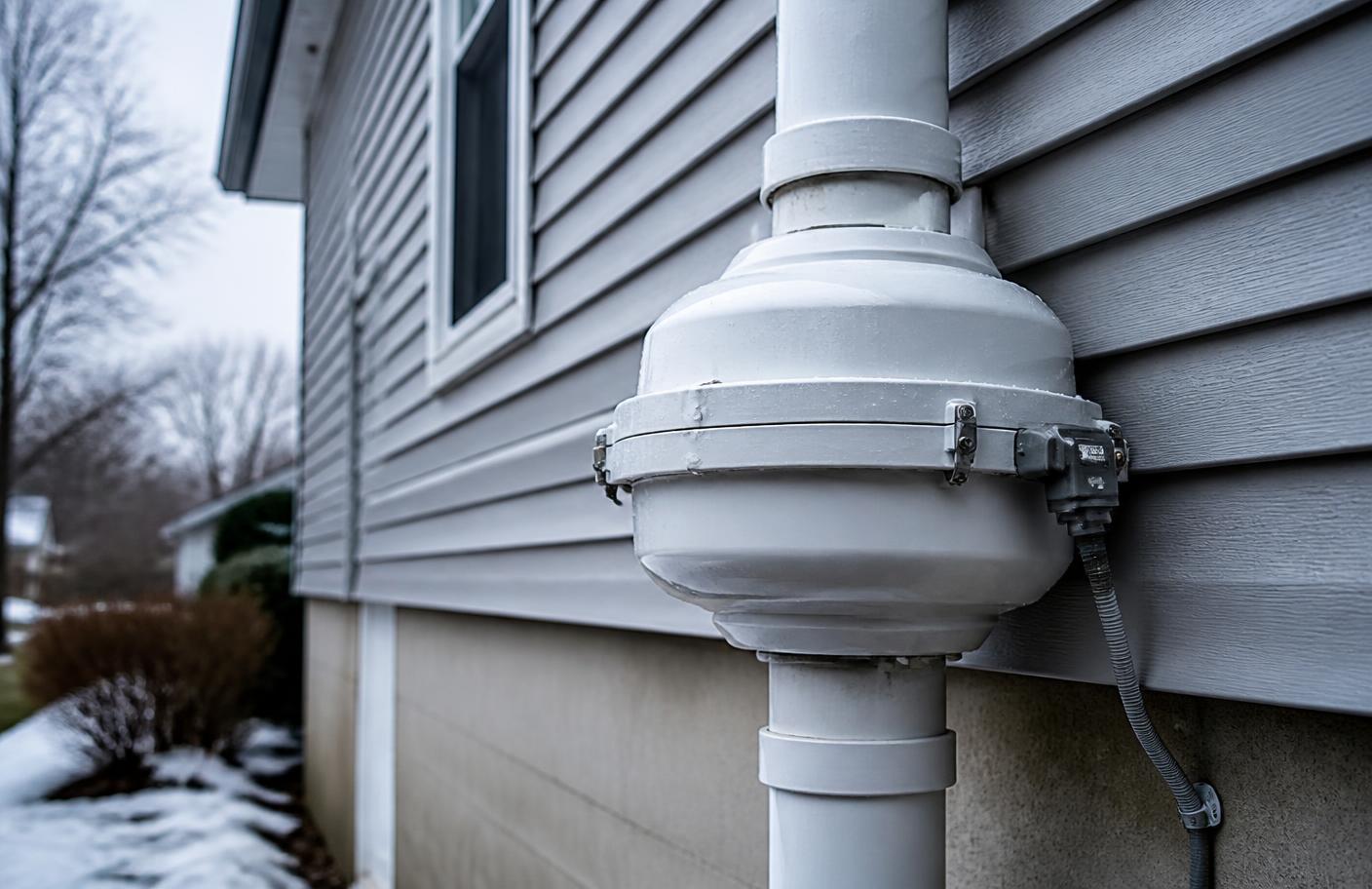
In a slab-on-grade Brownsburg home, the mitigation system draws suction from beneath the slab through a single interior penetration point, with piping typically routed up through a closet or utility space and then out through the roof or an exterior wall. Fan placement is usually planned for an attic, garage, or exterior location where noise and appearance have minimal impact on daily living space.
- Core-drilled suction points in interior garage or utility floor sections
- Vertical pipe routing through closets when routing through living space is unavoidable
- Exterior or attic fan placement to reduce visible impact
- Sealing expansion joints and slab penetrations as a complementary measure
Basement and Crawl Space Homes
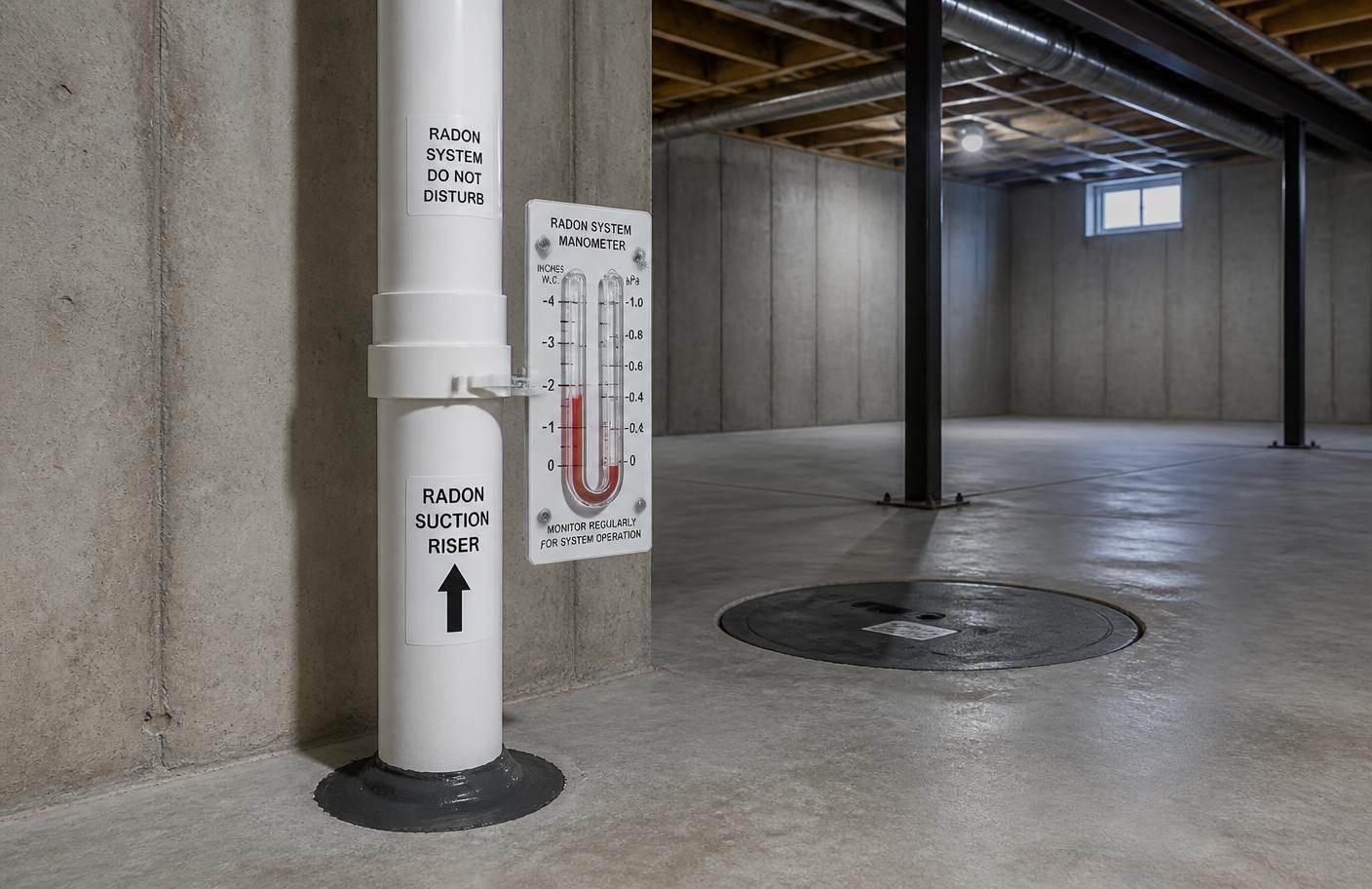
In Brownsburg subdivisions with basement construction, such as portions of Whitehall and Stonegate, the standard sump-pit-based sub-slab depressurization approach applies much as it does elsewhere in the Indianapolis suburbs. Homes with crawl space sections, sometimes found under additions or portions of older homes near the town center, may need a sub-membrane approach for that portion of the structure.
Real Estate Transaction Timelines
Brownsburg's active resale market means a meaningful share of radon testing and mitigation work here is tied to home purchase inspections and negotiated repair timelines rather than a homeowner's independent decision to test. Buyers and sellers working through a real estate transaction often need mitigation scheduled and completed within a specific window set by the purchase agreement, which makes clear communication about installation timing important.
For slab-on-grade homes with straightforward, accessible interior floor space, installation can often be completed in a single day, which helps meet tighter transaction deadlines. Homes requiring more complex work, such as multiple suction points or crawl space encapsulation alongside sub-slab mitigation, may need additional lead time that should be factored into negotiated closing schedules.
Testing Approach for Brownsburg Homes
A standard 48-hour or longer short-term test under closed-house conditions on the lowest occupied level applies whether the home has a basement or is built on a slab. For slab-on-grade homes, this typically means testing the main living level directly, since there is no separate below-grade level to consider.