First, Confirm the Result
EPA guidance recommends a follow-up test before making major decisions based on a single short-term result, particularly if the initial reading was close to the 4.0 pCi/L action level. A second short-term test, or a longer-term test if time allows, helps rule out an unusual spike caused by weather, closed-house conditions not being followed properly, or a device placement issue.
If your first test was well above the action level, for example above 8 to 10 pCi/L, many homeowners choose to move directly to scheduling a mitigation evaluation rather than waiting on a second confirmation test, since the likelihood of the reading reflecting an anomaly decreases as the number climbs higher.
Understanding Your Number
Radon results are reported in picocuries per liter (pCi/L) in the United States. The EPA action level is 4.0 pCi/L, and the agency recommends homeowners consider action when results fall between 2 and 4 pCi/L as well. There is no level EPA considers completely risk-free, so even homes below 4.0 pCi/L may benefit from mitigation, particularly for occupants who smoke or have other risk factors.
- Below 2 pCi/L: generally low priority for action per EPA guidance
- 2 to 4 pCi/L: EPA suggests considering mitigation
- At or above 4.0 pCi/L: EPA recommends fixing the home
- Above 8 to 10 pCi/L: often prompts quicker scheduling due to reduced likelihood of a testing anomaly
Scheduling a Mitigation Evaluation
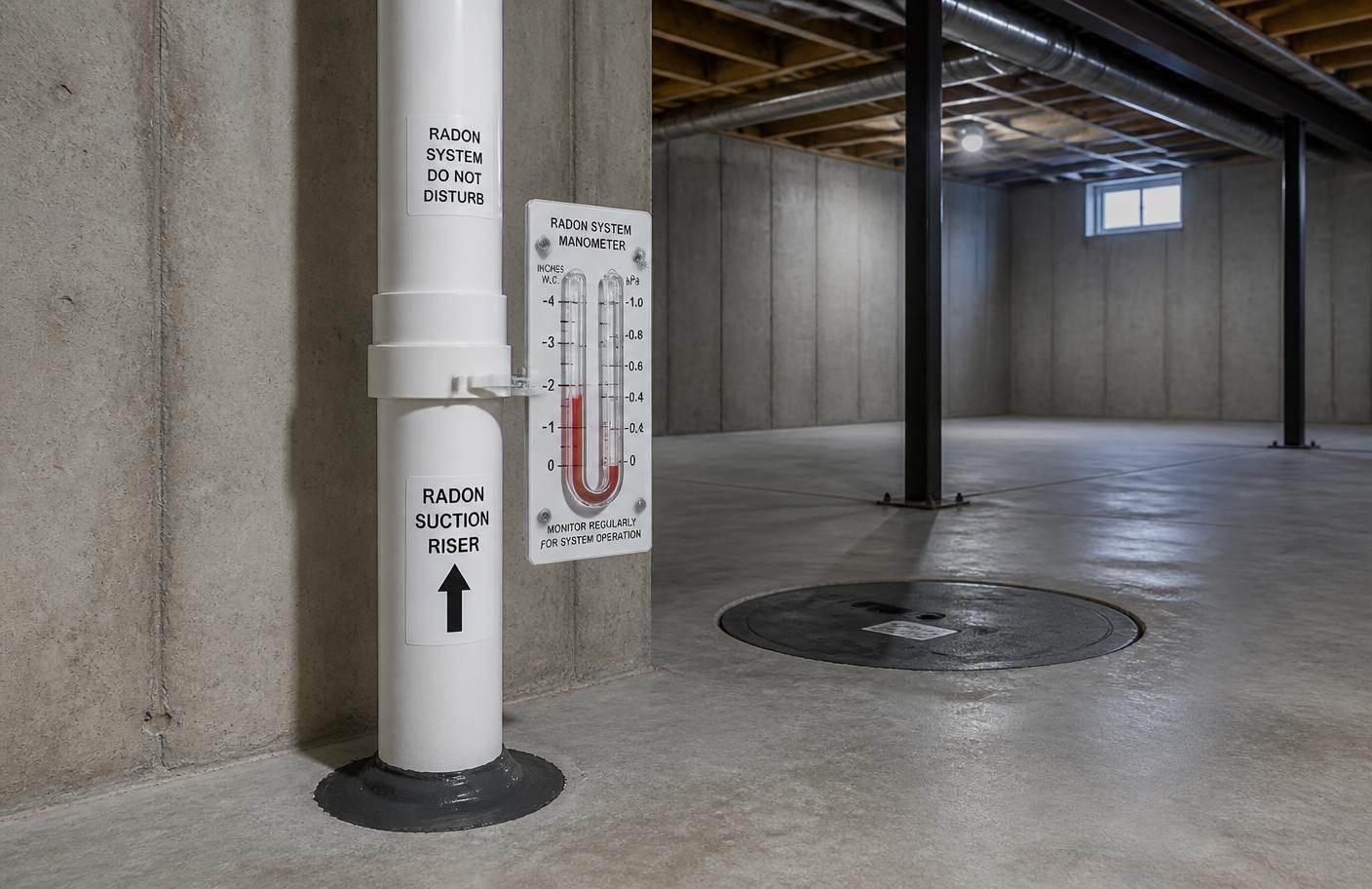
Once a high result is confirmed, the next step is a site evaluation by a mitigation contractor. This typically involves inspecting the foundation type, locating the sump pit if present, assessing the slab and any visible cracks, and identifying the best location for a suction point and exterior fan placement.
In Indianapolis, this evaluation also accounts for the specific foundation style common to the home's era and neighborhood, whether that is a full basement with a sump pit in a newer subdivision or an older stone or block foundation found in neighborhoods like Broad Ripple or Butler-Tarkington. The evaluation determines whether a single suction point will be sufficient or whether the home's slab construction requires multiple points.
What Happens During Mitigation Installation
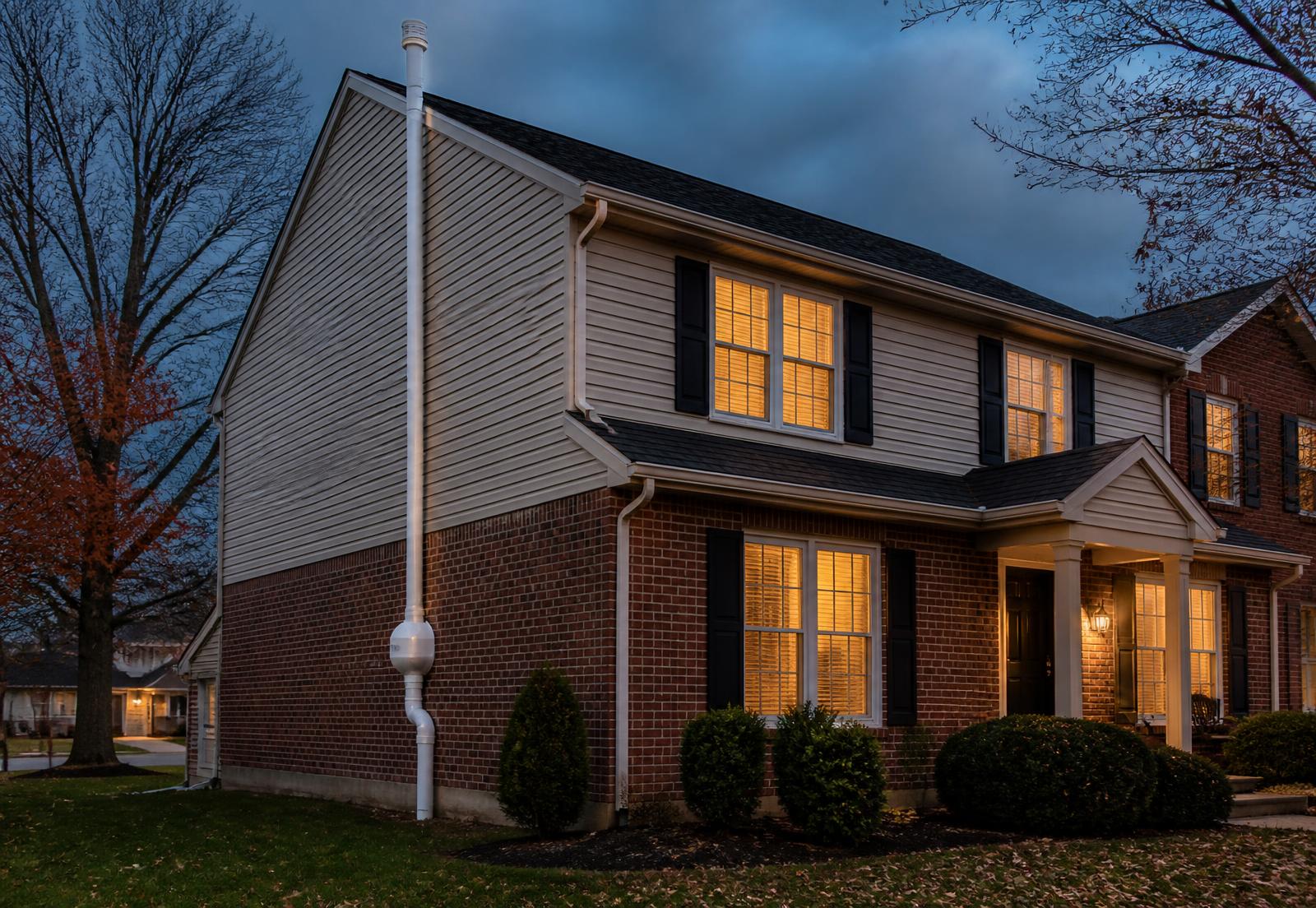
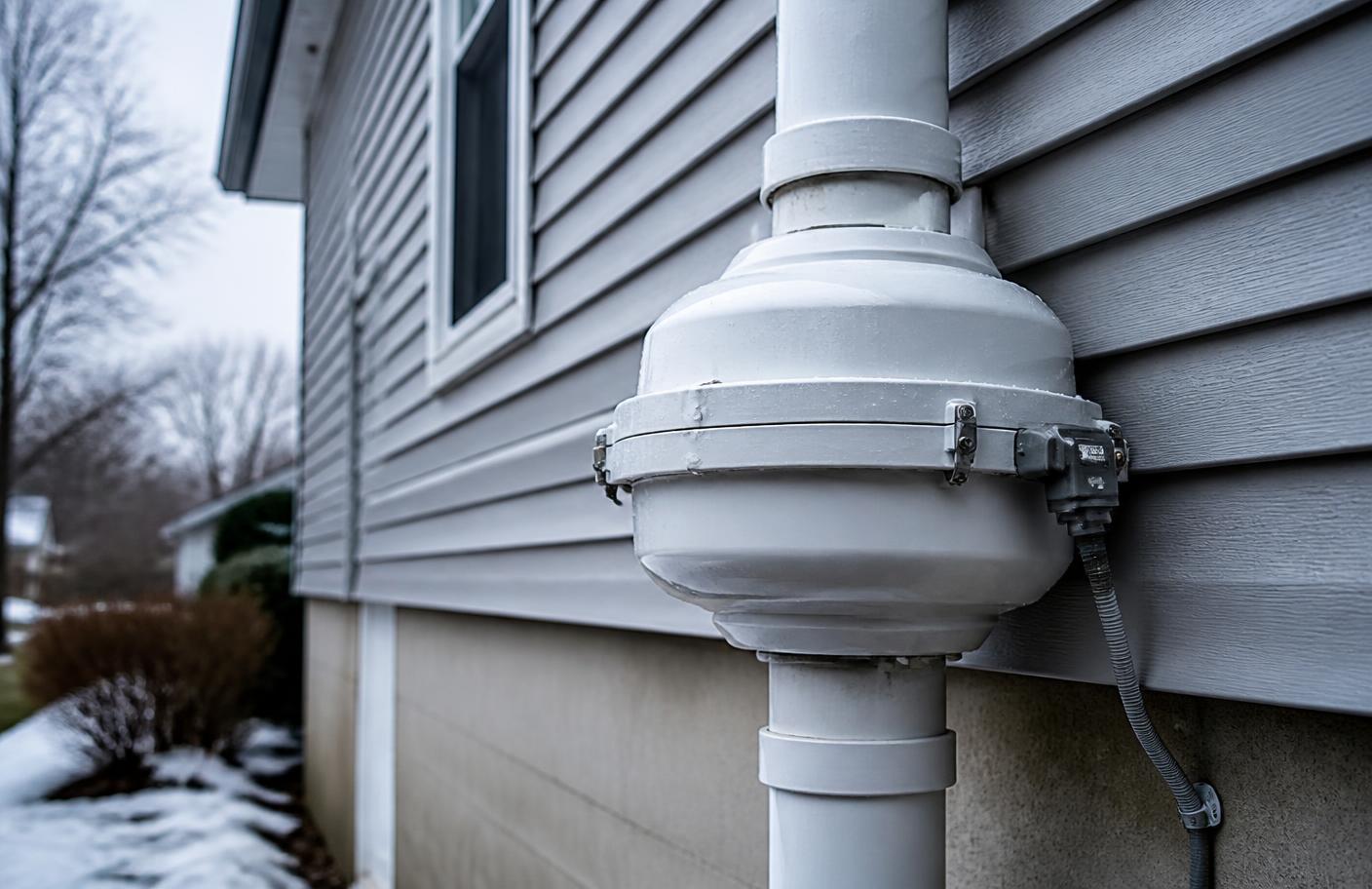
Most residential radon mitigation systems in the Indianapolis area use sub-slab depressurization, in which a suction point is created through the basement or garage slab, connected to PVC piping routed to an exterior-mounted fan, and vented above the roofline or eave. Crawl space homes typically use sub-membrane depressurization instead, sealing a heavy plastic membrane over the exposed soil and drawing air from beneath it.
Installation for a typical single-family home is often completed in about one day, though homes with unusual layouts, multiple foundation types, or finished basements can take longer. After installation, the system is tested with a manometer to confirm proper vacuum, and the contractor should perform or recommend a post-mitigation test.
Confirming the Fix With Post-Mitigation Testing
After a system is installed and running, EPA guidance and standard industry practice call for a post-mitigation test, typically a short-term test conducted no sooner than 24 hours after system startup, to confirm the reading has dropped below 4.0 pCi/L. Our practice recommends retesting again periodically thereafter, since fan performance and home conditions can change over time.
- Wait at least 24 hours after system startup before testing
- Use closed-house conditions during the confirmation test
- Retest every two years or after any renovation, per common practice
Living in the Home While You Wait
There is no need to leave the home immediately after receiving a high radon result, since risk relates to long-term cumulative exposure rather than short-term presence. That said, simple interim steps such as increasing ventilation in occupied lower-level rooms and avoiding prolonged periods with all windows sealed can modestly reduce exposure while scheduling mitigation.
The most effective and lasting solution remains a properly designed and installed mitigation system rather than ventilation alone, since natural or mechanical ventilation is generally less reliable and more costly to sustain over time than an engineered sub-slab depressurization system.