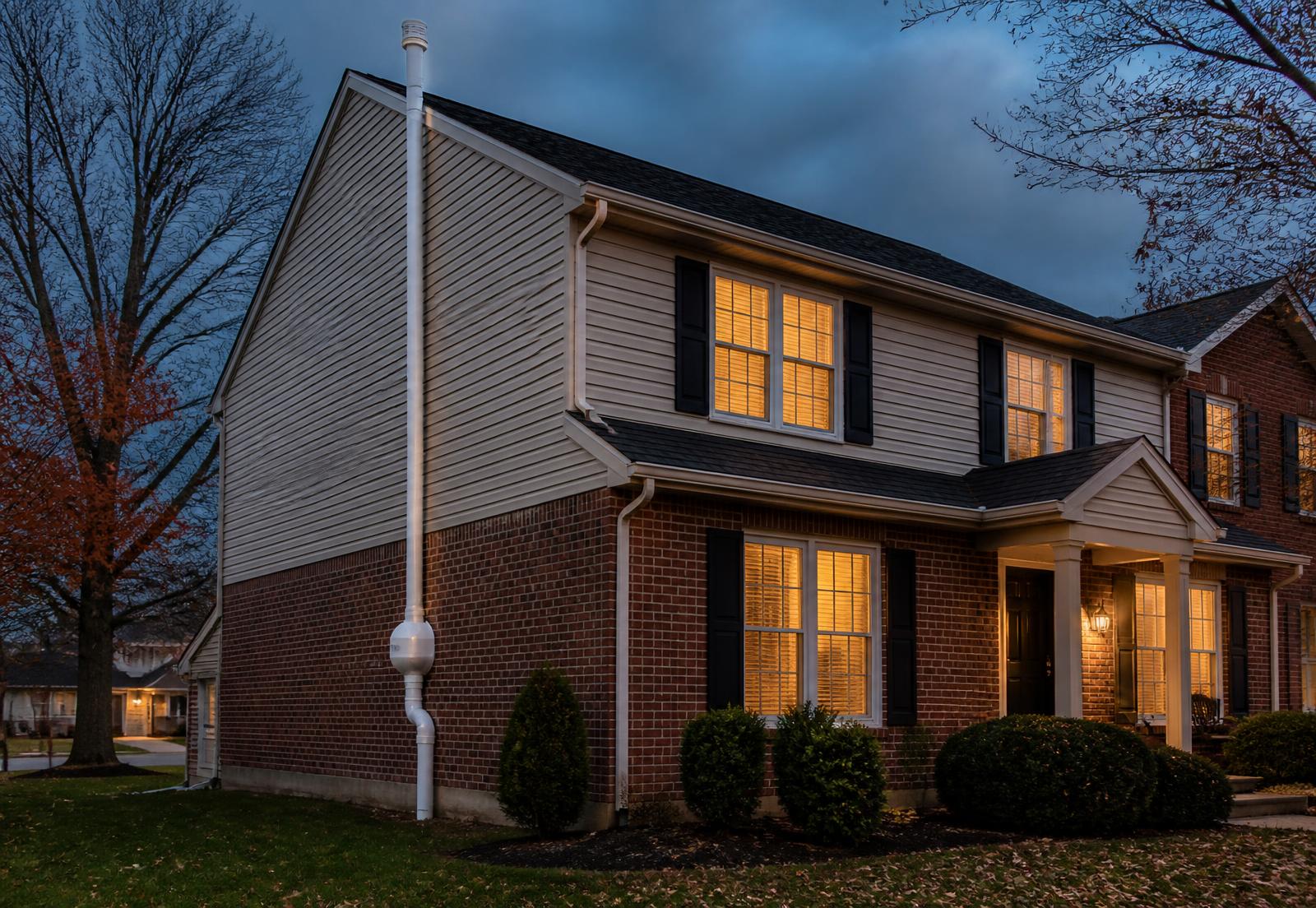
Why Crawl Spaces Complicate Test Placement
In a home with a crawl space instead of a full basement, there is often no obvious below-grade room to test, since the crawl space itself is not a lived-in area. EPA guidance calls for testing the lowest lived-in level of the home, which in a crawl space house typically means the first floor rather than the crawl space itself, unless a portion of that space has been converted to occupied living area.
This distinction matters because testing on the first floor of a crawl-space home can sometimes produce a lower reading than testing would in a full basement of a comparable home, not because the underlying soil gas conditions differ, but because there is more distance and dilution between the soil and the tested space. Homeowners should understand that a lower first-floor reading does not necessarily mean the crawl space itself has low radon potential.
Testing Homes With Partial Basements
Many Zionsville homes have partial basements, where only a portion of the home's footprint has a below-grade room while the rest sits over a crawl space or slab. In these homes, choosing where to place the test device requires identifying whether the partial basement itself is used as living space, and if so, testing there rather than on the main floor above the crawl space section.
If the partial basement is unfinished and used only for mechanical equipment or storage, but is still the lowest level of the home, it is generally still the correct testing location under EPA protocol, since the test aims to capture radon exposure in the lowest area of the structure regardless of finish level, as long as it is a space people spend time in periodically.
Correct Device Placement in Mixed-Foundation Homes
For any Zionsville home with a mixed foundation, whether a partial basement, a crawl space, or a combination of both, the device should be placed in a stable location away from exterior doors, windows, sump pits, and HVAC vents, at least 20 inches above the floor. In a converted crawl space area used as a small finished room, this same standard applies even though the space is unconventional.
Homeowners who are unsure which area of their home qualifies as the correct testing location, particularly in a multi-level split design common in some Zionsville neighborhoods, benefit from confirming placement before starting the test rather than after, since an improperly placed device can produce a result that does not reflect actual conditions in the home's regularly occupied space.
Choosing a Device for Zionsville's Foundation Mix
A charcoal canister test works well for most Zionsville homes and is commonly used for real estate transactions, running a minimum of 48 hours under closed-house conditions. A continuous radon monitor can be especially useful in homes with crawl spaces or partial basements, since its hourly data can help confirm that a reading reflects consistent conditions rather than a fluctuation tied to HVAC cycling near a converted crawl space room.
- Charcoal canister: standard option, 48+ hours, single averaged result
- Continuous radon monitor: hourly data useful for confirming placement accuracy in mixed-foundation homes
- 90-day alpha-track test: appropriate for a seasonal average outside a transaction timeline
Interpreting Results in a Home Without a Full Basement
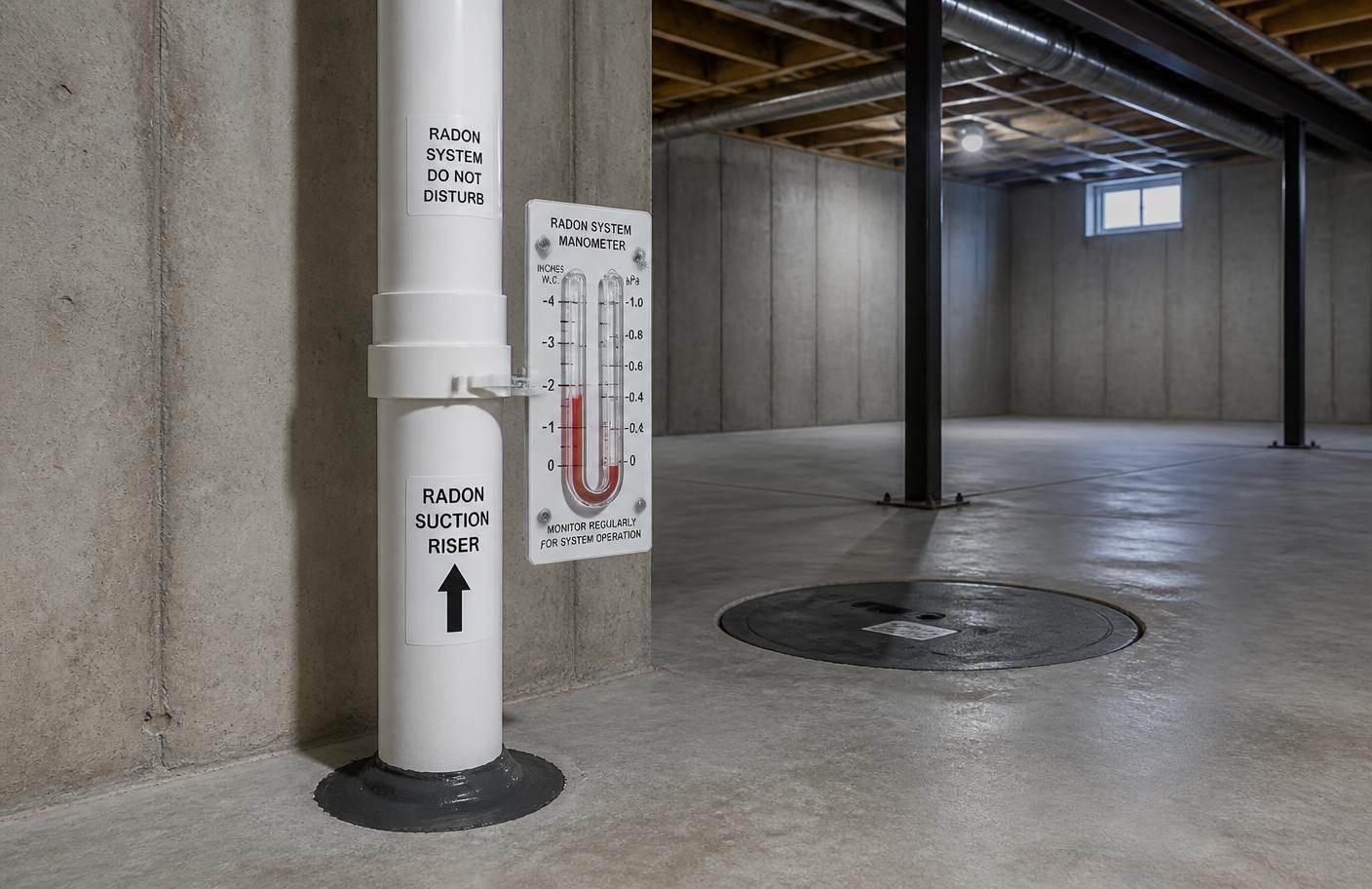
The EPA action level of 4.0 pCi/L and the 2 to 4 pCi/L range EPA suggests homeowners consider addressing apply the same way to a Zionsville crawl-space or partial-basement home as they do to a home with a full basement. A first-floor test above a crawl space that comes back elevated still warrants the same mitigation discussion as an elevated basement reading.
If there is uncertainty about whether the test was placed in the correct location, for example because the home has an unusual split-level layout, a retest with the device relocated to a confirmed lowest lived-in area can help ensure the result accurately represents the household's radon exposure.